Notebook
Experiments, wrong turns and the questions behind the machines. These are my working notes, with code, sources and explanations you can try.
Search titles, descriptions, series and repository names.
যন্ত্র11 notes
The machines
The long versions of the river's chapters: what each machine was, who built what, and how it went.
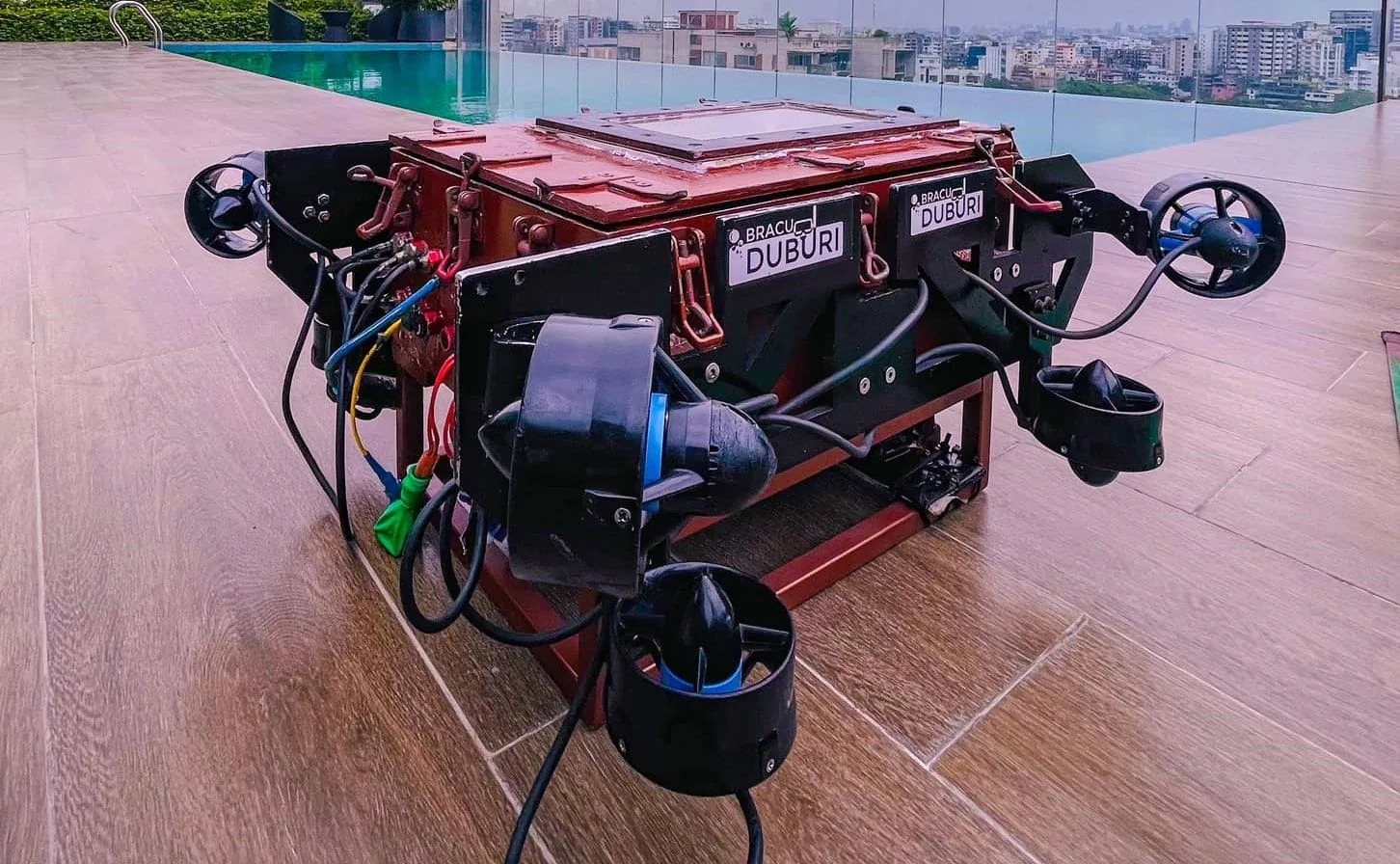
- 1How Duburi learned to seeMy Duburi years, September 2023–August 2026: from the vision sub-team to engineering lead, underwater perception, two vehicles and the difference between a convincing display and a usable measurement.
- 2Before the water, a rocketGuidance, navigation and control for amateur rocketry, a thrust-vector gimbal, and the first hybrid rocket engine tested in Bangladesh.
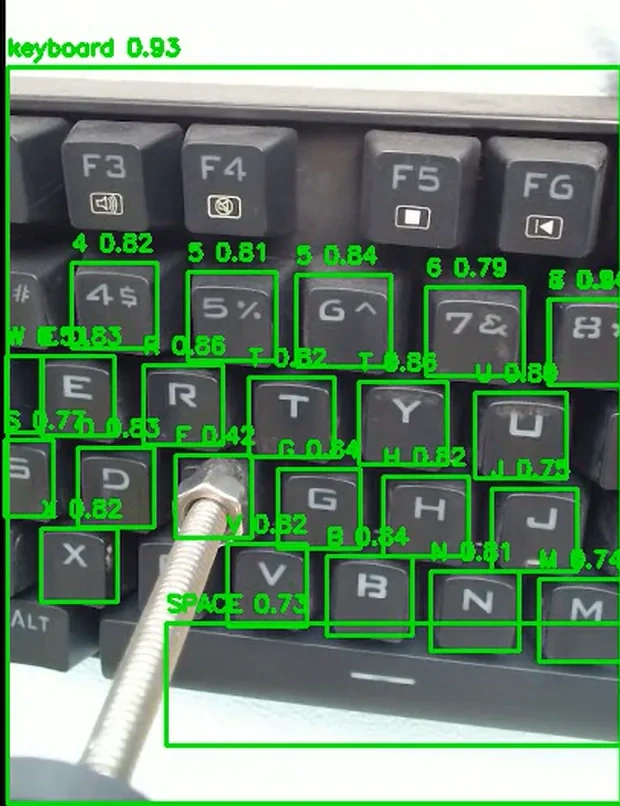
- 3A rover arm that typesMy Mongol-Tori work: key detection, OCR, a separate vision unit and a two-link arm. The preserved controller makes the distance between solving a triangle and pressing a key unusually clear.
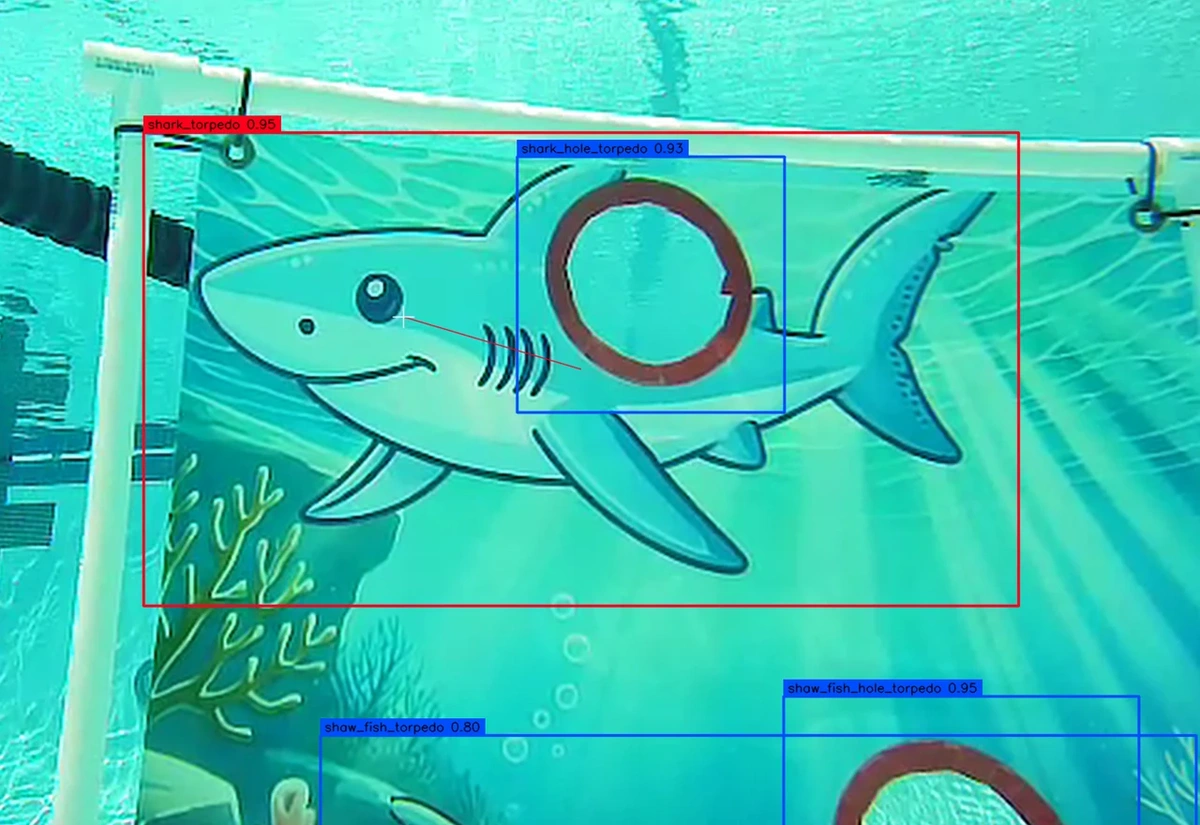
- 4MonglaAn autonomy stack for underwater vehicles, built so that every number it shows comes with the measurement that produced it. Including the ones that were wrong.
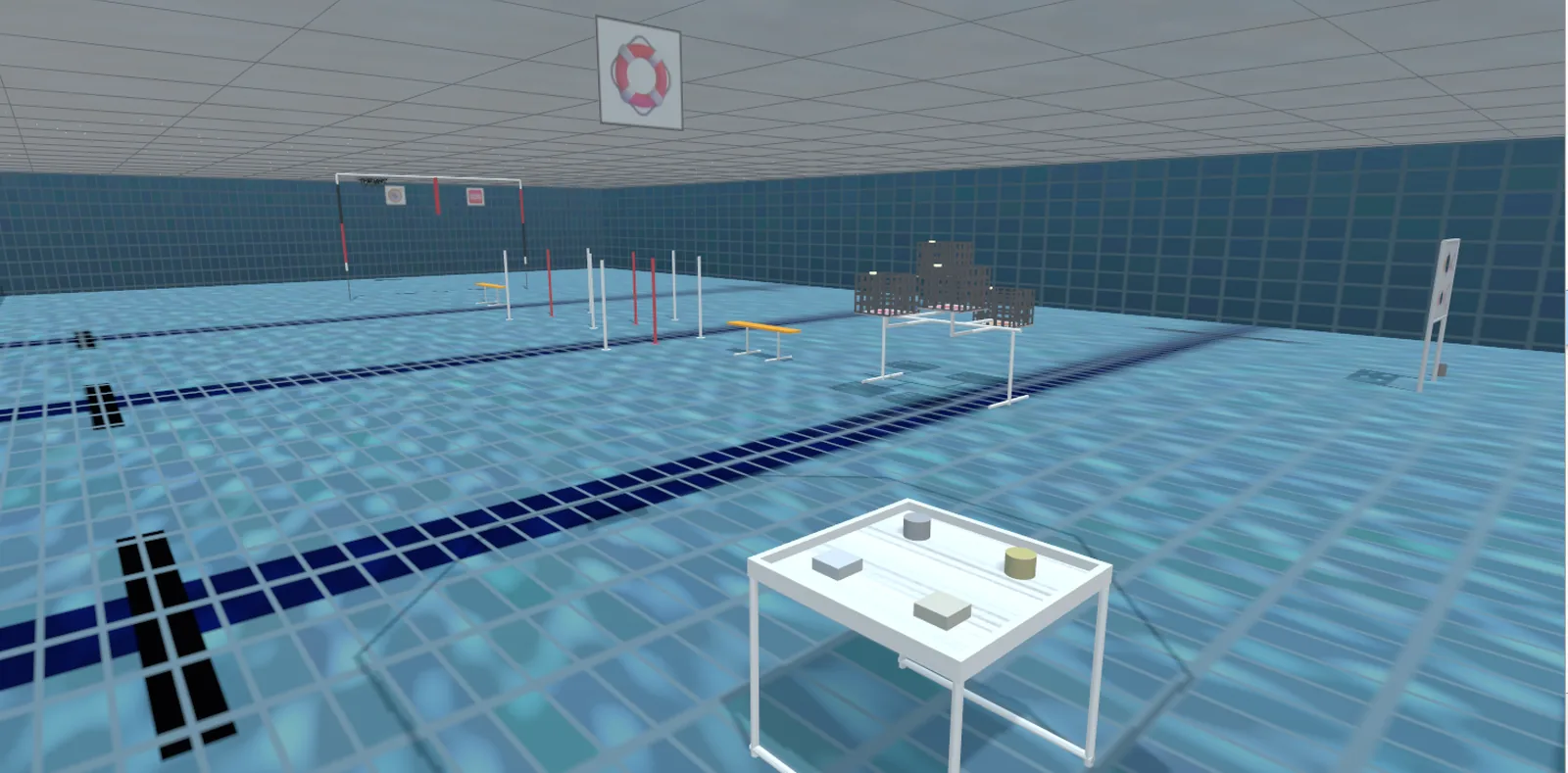
- 5The pool we builtMongla Sim: Gazebo, ArduSub SITL and an operator lab. Six courses, a native DVL, and a test that fails if the simulator and the autonomy stop agreeing.
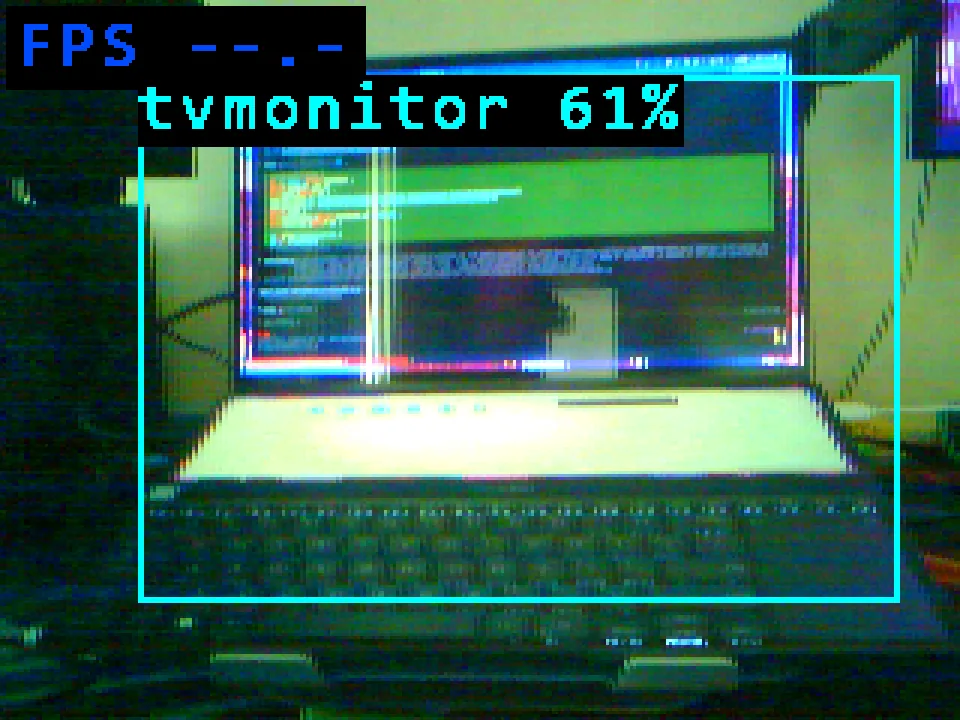
- 6Dristy (দৃষ্টি)A camera that answers with a number, not a video stream. Open firmware for a K210 that does the seeing so the robot doesn't have to.
- 7The workshopThe editor screenshots from 2022, a browser page from 2023, and the two-host workbench they grew into. Tools, habits, small experiments, and a desk with a personality.
- 8The versions between campaignsThe 2025 folder: a gate the detector missed, thirteen versions of a vision controller, DINO identity experiments, and the difference between a display full of numbers and a measured navigation system.
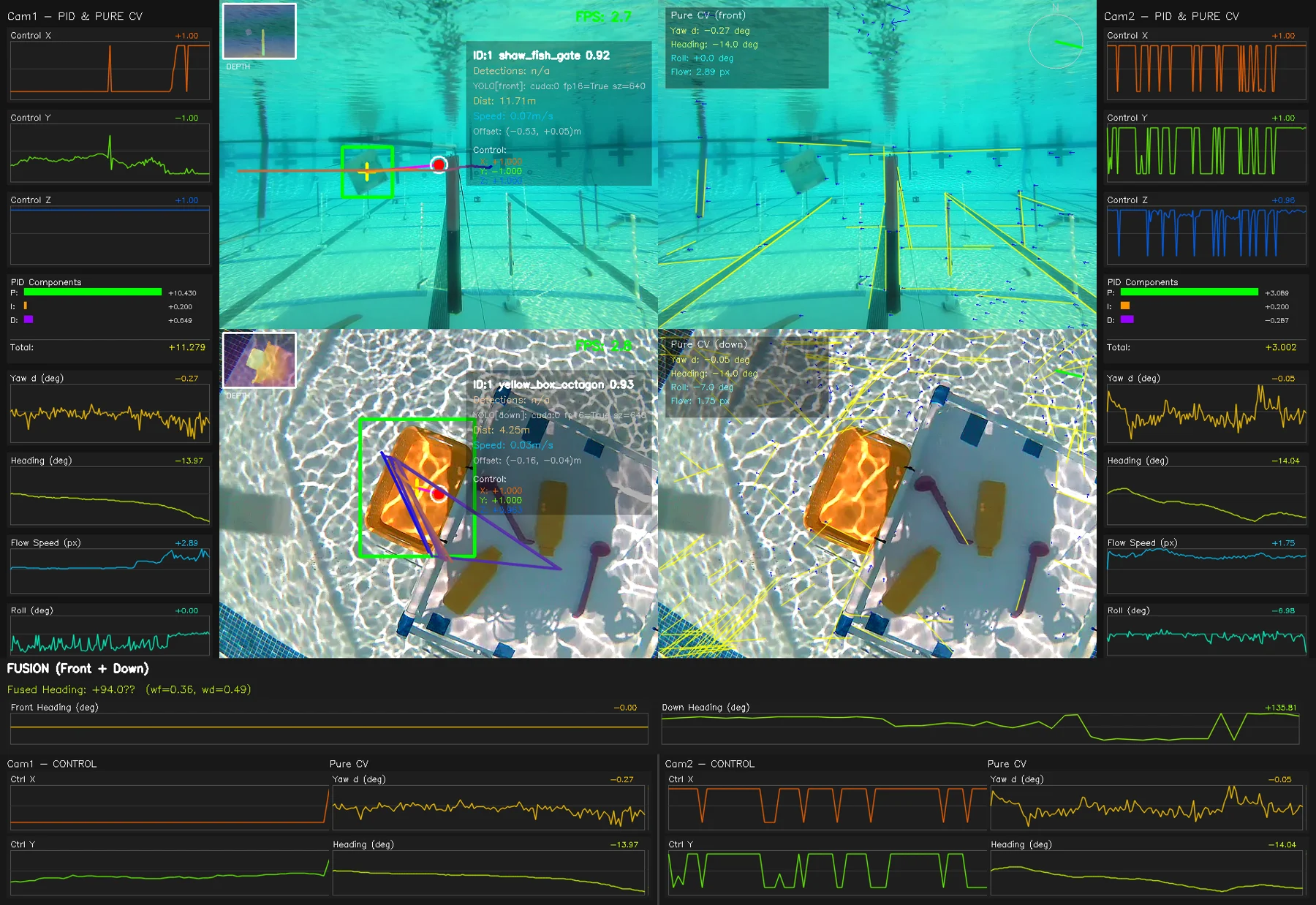
- 9Reading the Ping360, below the pictureMy sonar logger, viewers and detection experiment: learning what a ping contains, where its units come from, and what I would need to understand before writing independent firmware.
- 10A fixed point in moving waterDhrubotara: reference images, XFeat, optical flow and an old guidance display. A pool recording and a ten-pixel experiment expose the difference between a useful visual cue and a depth measurement.
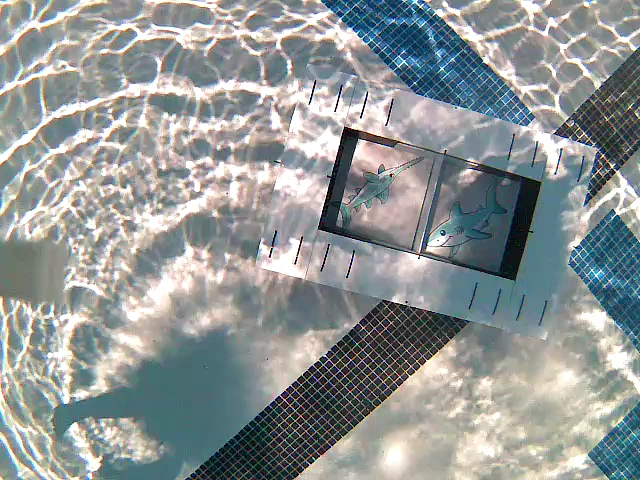
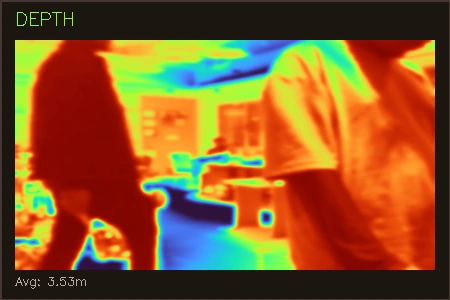
- 11Where the metre enters the mapMatra: a mapping experiment, a depth image and the ruler hidden between them. Known geometry recovers the right scale; a different pixel then exposes what frame-wise normalization can take away.
জল5 notes
Water, from first principles
Why there's no radio down there, what water does to colour and to angles, and how a camera becomes a speedometer.
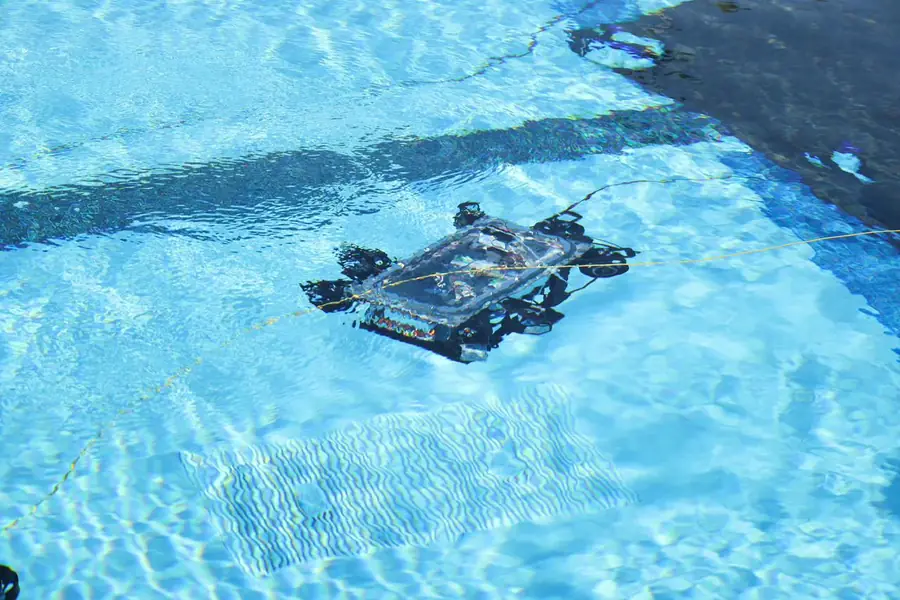
- 1No radio below the surfaceOrdinary GPS and Wi-Fi do not carry underwater the way they do through air. Bulk attenuation, limited alternative links and the missing live operator explain much of this vehicle's autonomy architecture.
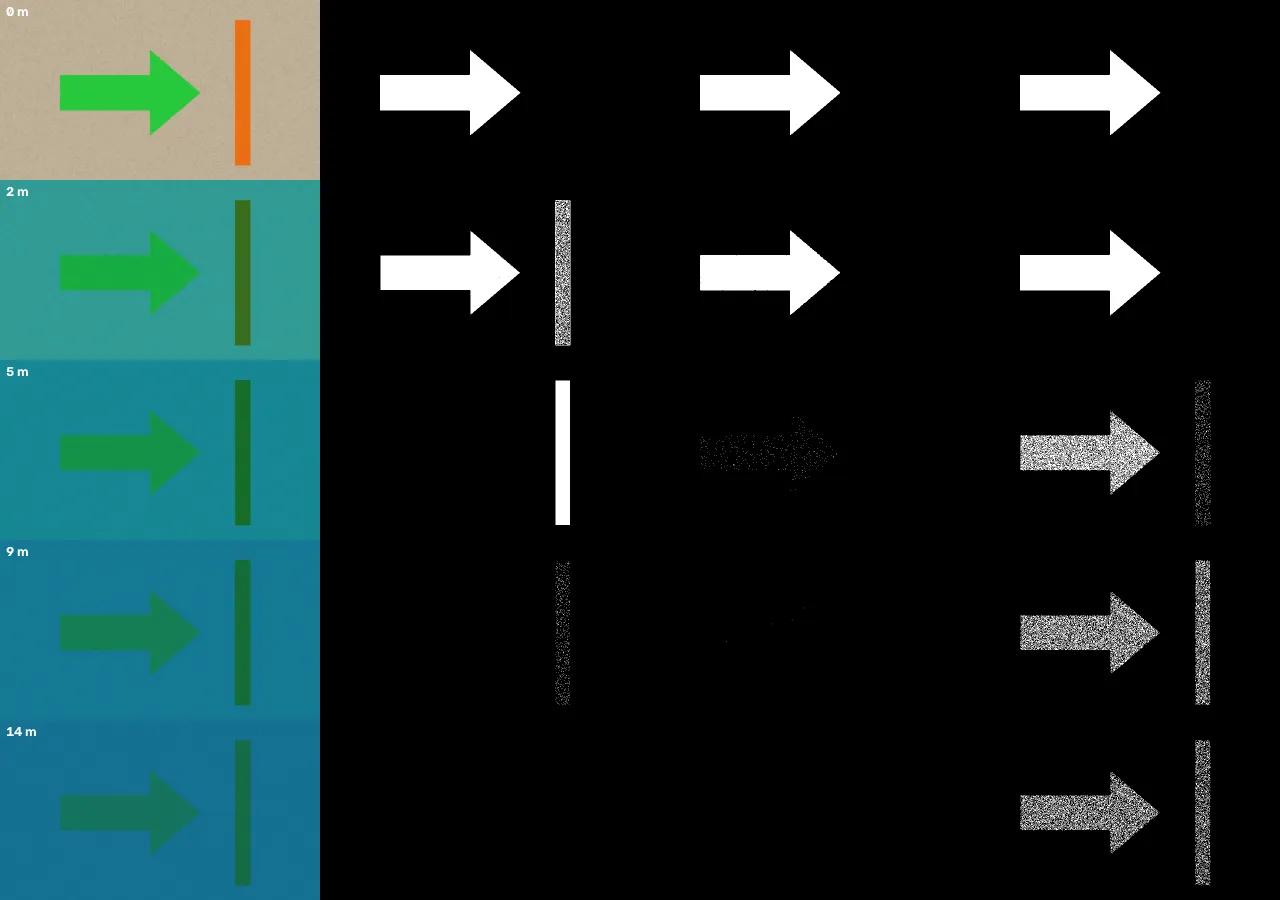
- 2Green, at depthIn 2023 I found arrows by asking each pixel whether it was green. Then I took the question for a swim.
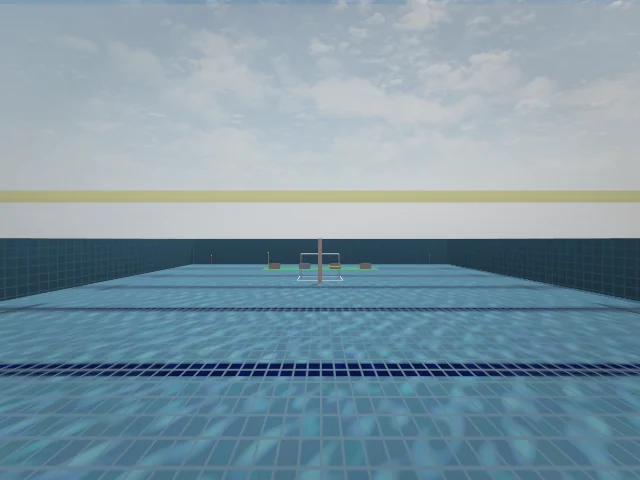
- 3One lens, two fields of viewAn air calibration and a flat-port model predict different viewing cones. A ray-traced regression showed why sharing one focal length also biased the range differently across the image.
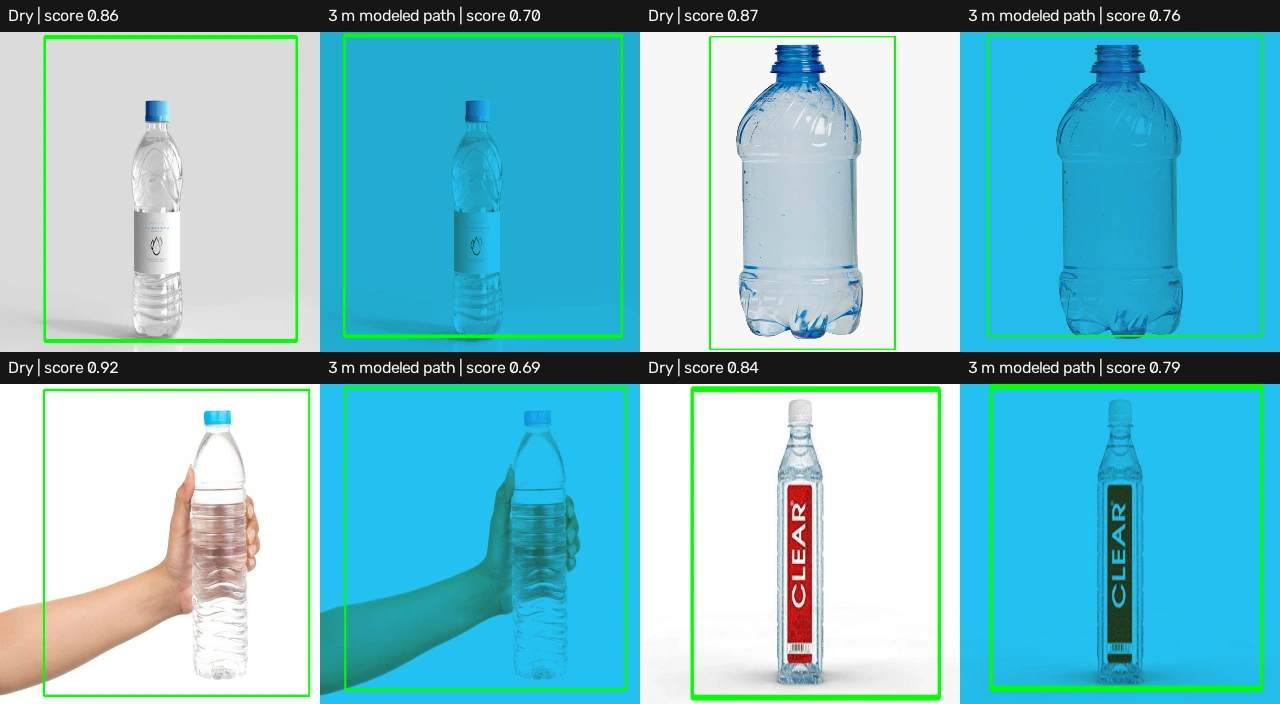
- 4The interview bottleThe 2023 entry task, re-opened in 2026: a bottle detector, a duplicated test split, and what confidence, box overlap and simulated water actually let me claim.
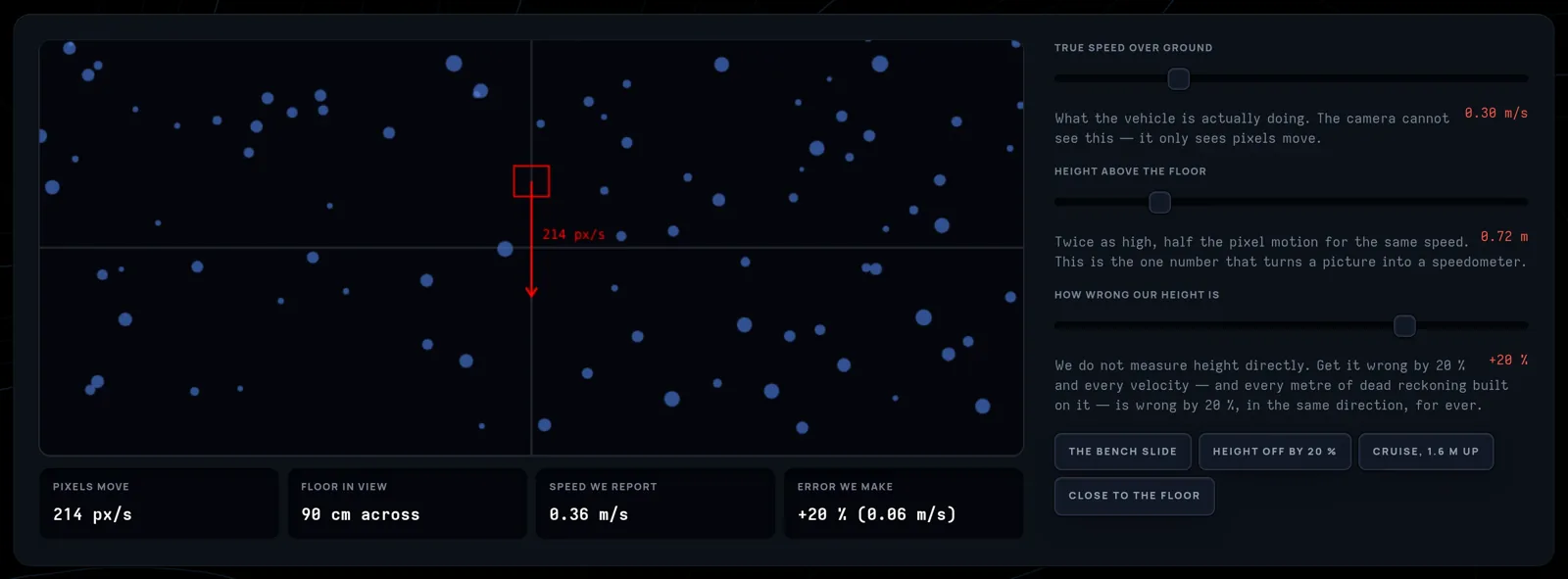
- 5The floor is a speedometerNo DVL, no GPS. A downward camera can measure speed over ground if you know one number. Getting there took three instrument bugs, all making the same mistake.
দৃষ্টি6 notes
Seeing
What detectors actually look at, how to make them run on small chips, and how to tell when they're lying.
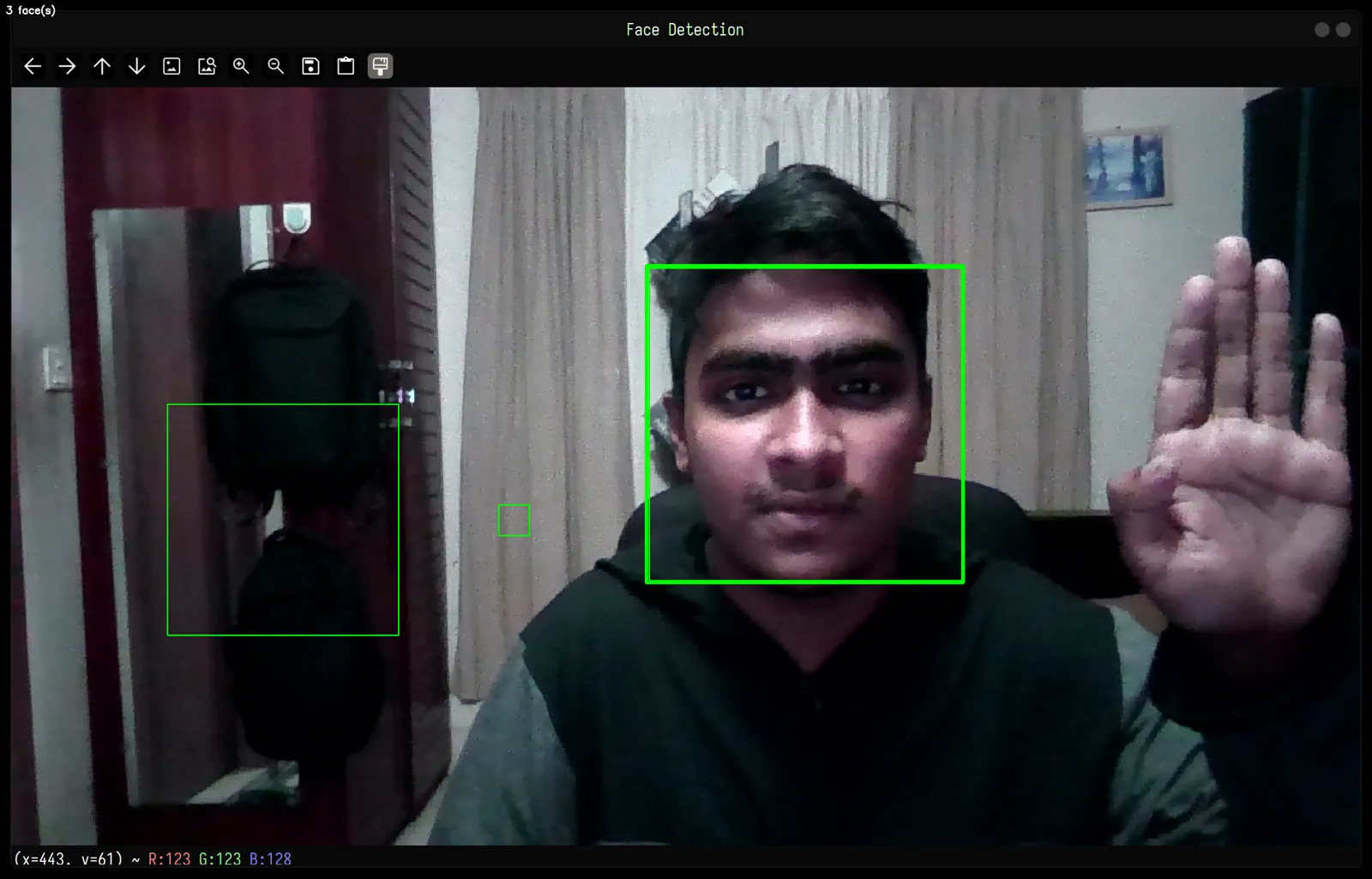
- 1PareidoliaMy first face detector found me. Three years later it also found two backpacks. What does a 2001 detector actually look at?
- 2The 71 transposes that were one operationAn accelerator compiler rejected a tangle of tensor operations. Replacing the underlying permutation preserved the floating-point graph—but the throughput headline was not the cost of a real call.

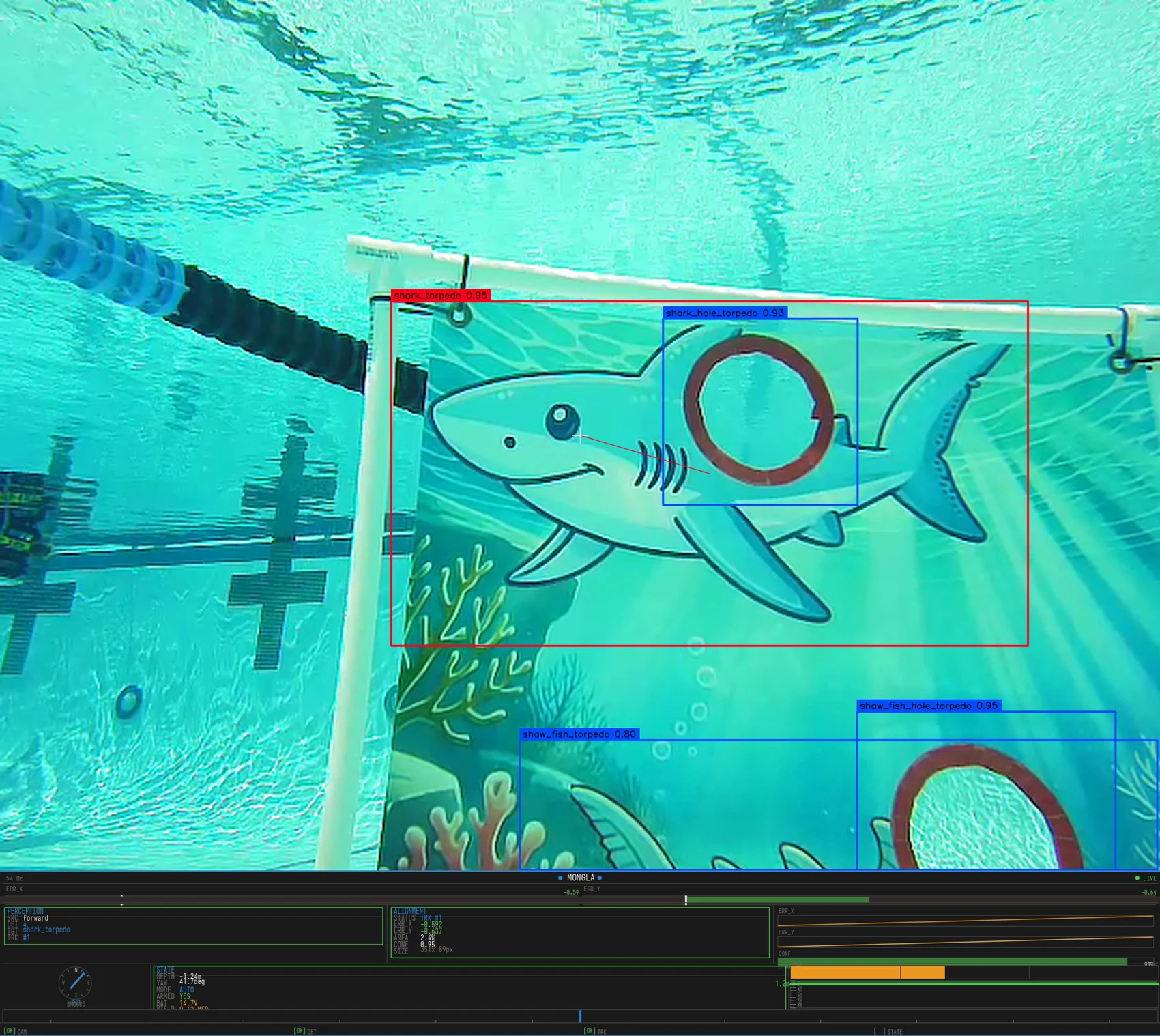
- 3The bank that ran the backbone five timesA per-lookup cost that barely moved with top_k was the tell. Something else was the real cost, and it was worth more than the optimisation I went looking for.
- 4The anchor that learned to take a second photographA frozen reference missed close views of a target the camera could plainly see. Drawing the matches exposed three admission-policy defects, then made their correction measurable.
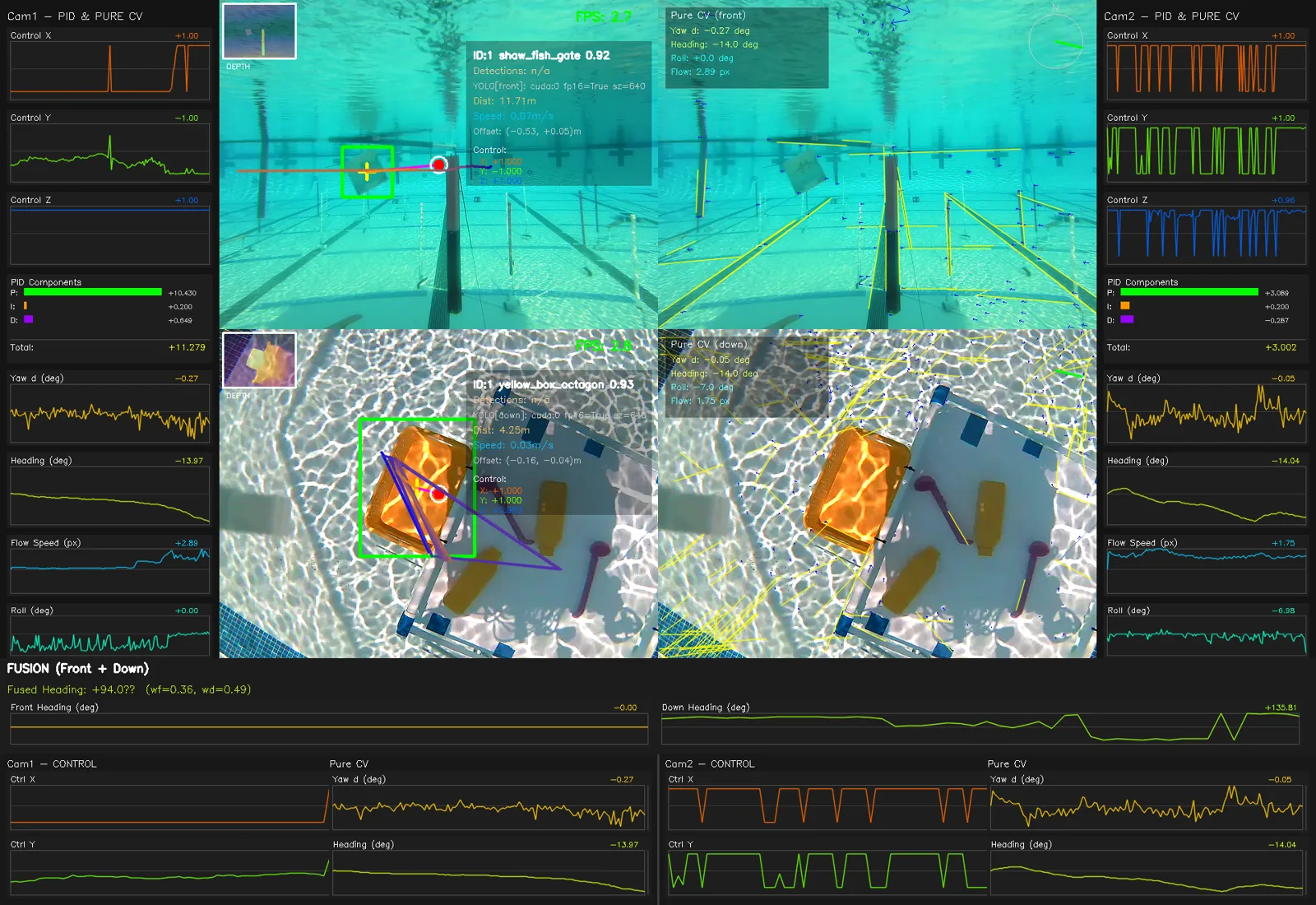
- 5179 identity switches, and what the vehicle actually neededFirst the diagnostic read no identity. Then it counted identity in a way the vehicle never used it. The later audit changed what was worth fixing.
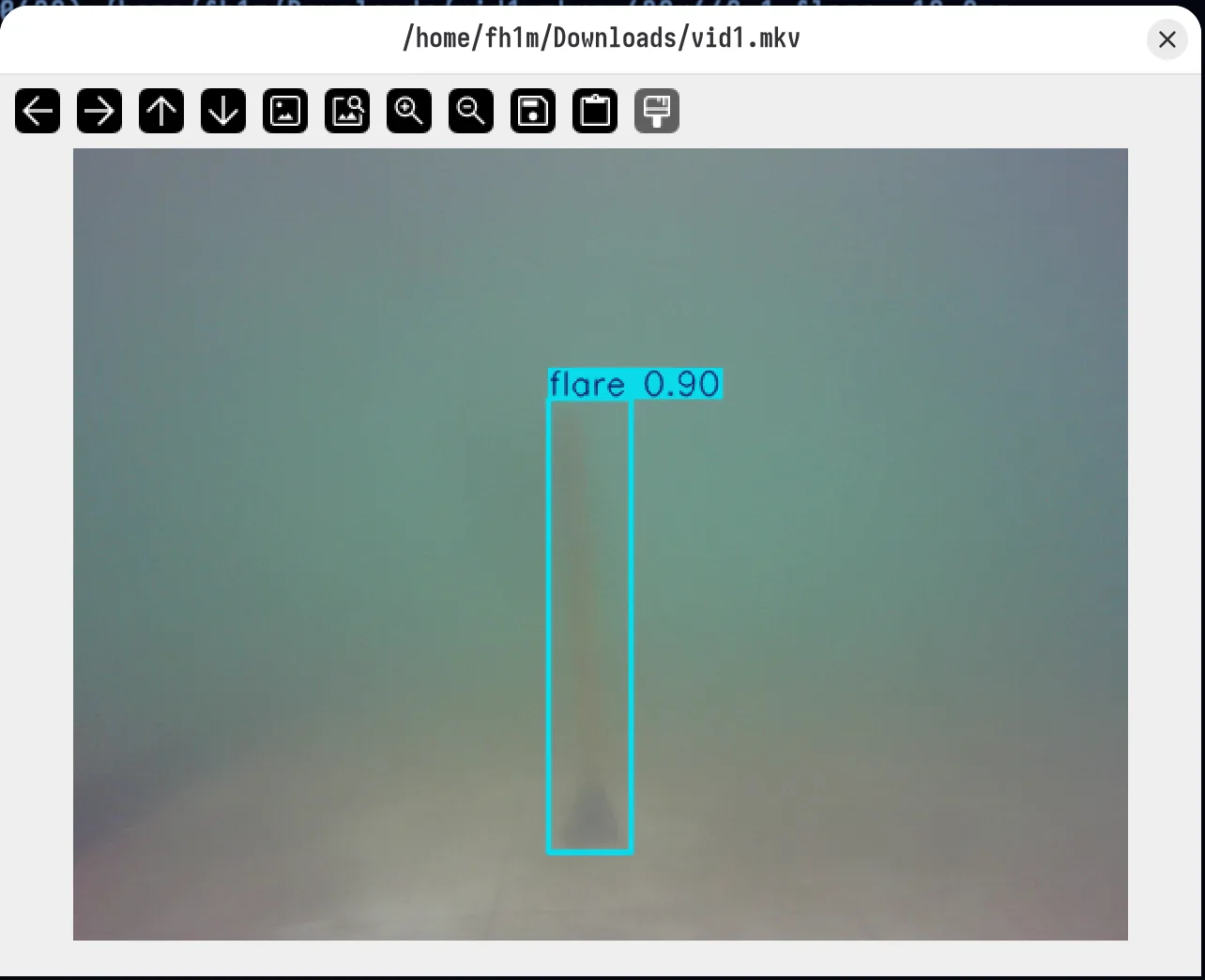
- 6Nobody had asked what the camera's own loops were doingThe vision stack reads pixels after the camera has already edited them. A static-scene comparison exposed that boundary—and the limits of the comparison itself.
সময়6 notes
Time
Every number a robot uses is about a moment that has already gone. Frame age, gaps, delay and the people in the loop.
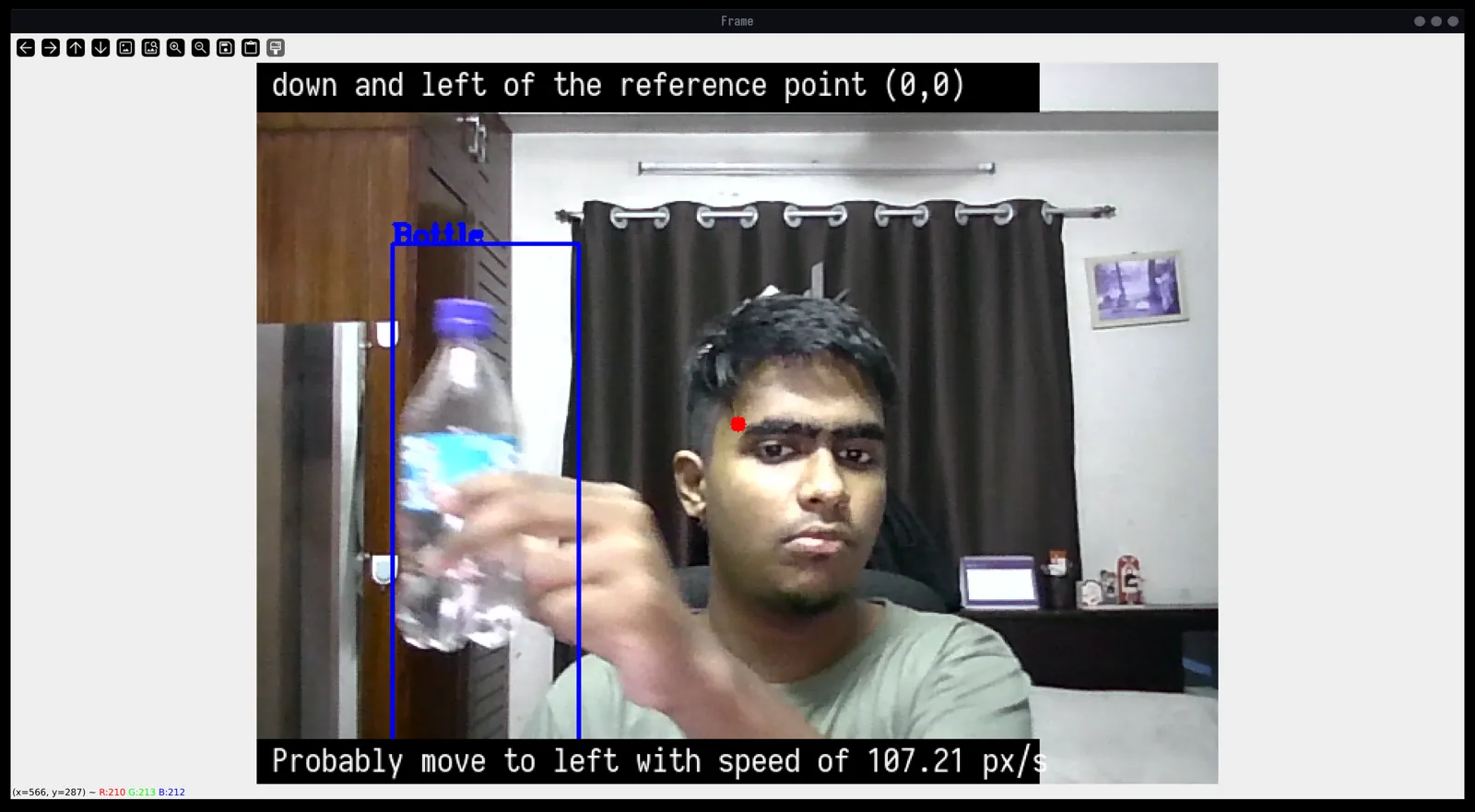
- 1Half a secondIn 2024 my webcam narrated a bottle: 'probably move to right with speed of 98.41 px/s'. It felt like prediction. It was subtraction.
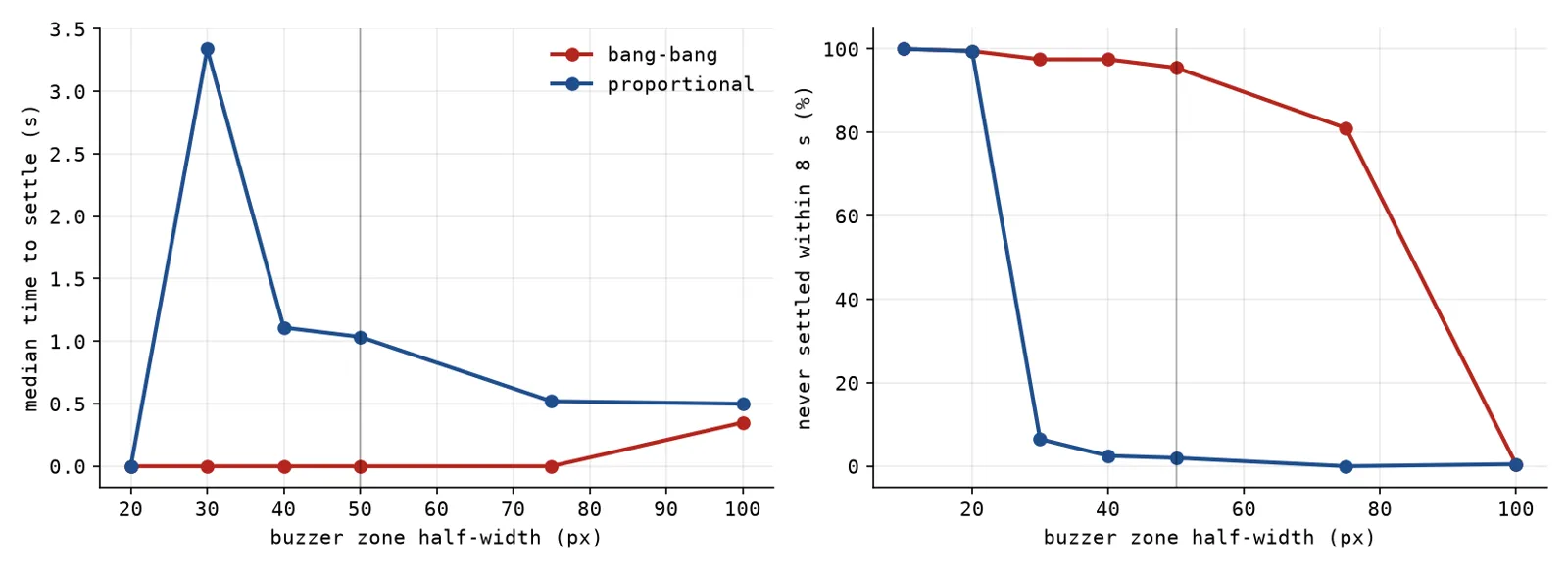
- 2Four LEDsCan a person steer a camera onto a target when the only feedback is four LEDs? A control loop where the controller is a human.
- 3The frame-age problemFour old host buffers, a misleadingly fast read call and a timestamp that lied twice. The useful result is a measured capture path—not a claim that every camera or the whole control loop has the same latency.
- 4Tracking without detectionUnderwater, detectors blink. Sizing the lock that survives the blink needed the first real measurement of how long a blink lasts, and turned up a tracker that had been emitting nothing at all.
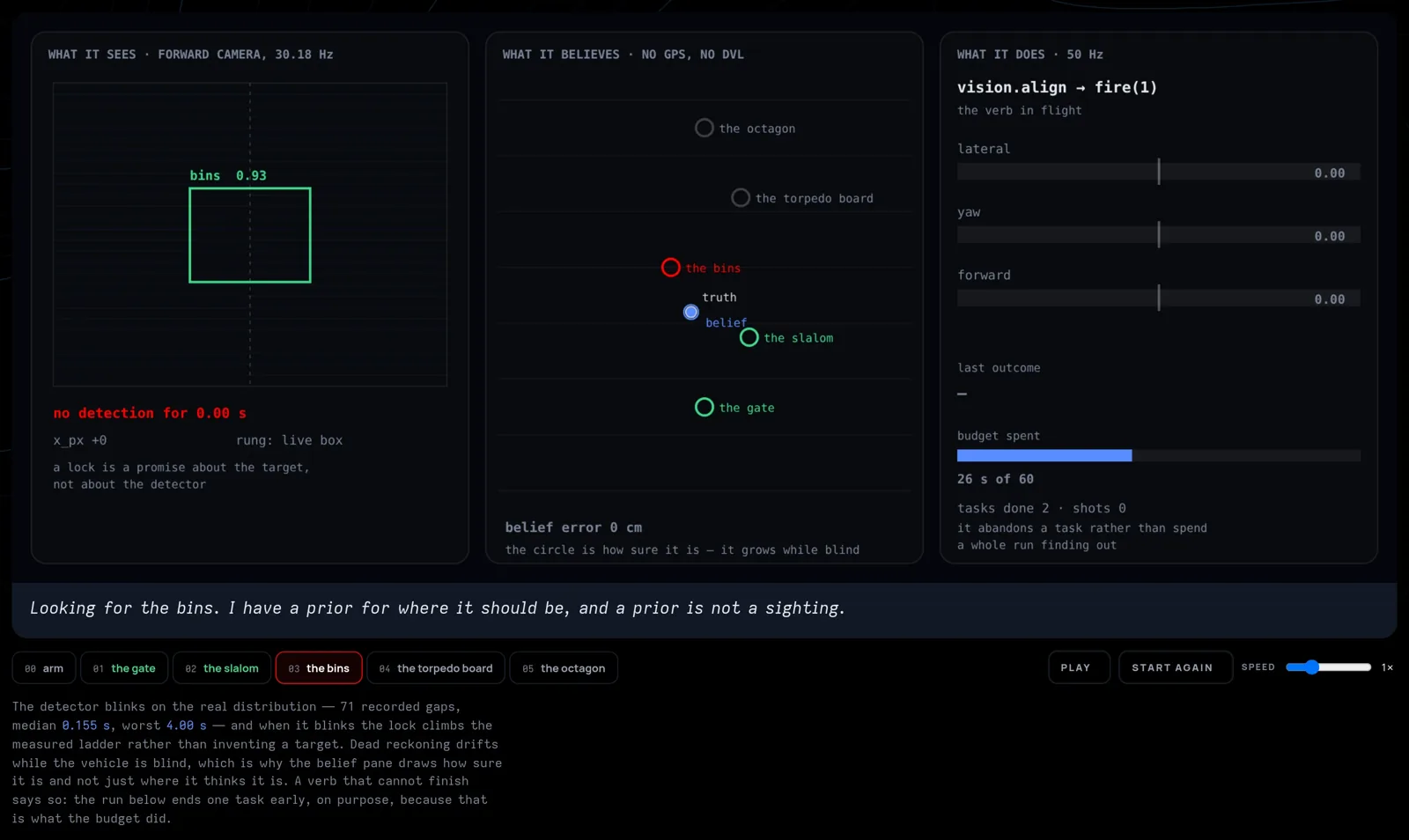
- 5Every measurement is about the pastA position fix describes where the vehicle was when the shutter opened. Apply it as if it were now and you drag the estimate backwards, and sideways in a turn. The fix is to put the correction where it belongs.
- 6A displacement called velocityDhara: an old perception engine, a three-line assignment and the second missing from m/s. Controlled poses separate the unit error from feature quality—and show why even a positive time interval can belong to the wrong events.
সত্য7 notes
Measuring honestly
Liars in the data, canaries, retractions, and the cheapest experiment in robotics: leaving the robot alone.
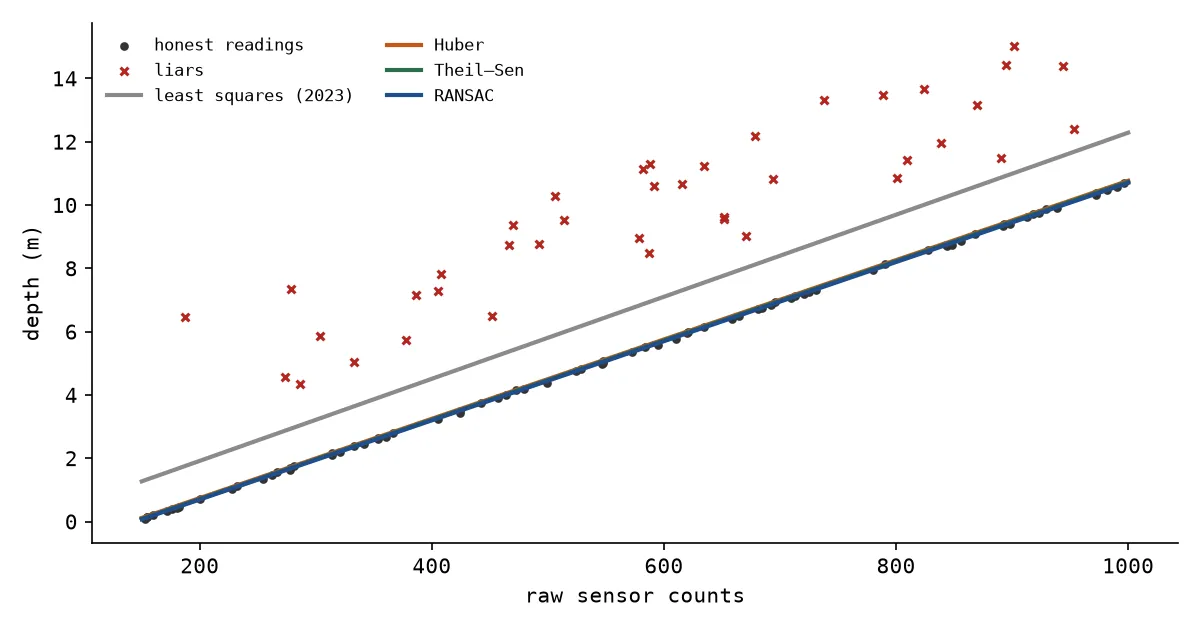
- 1Trust issuesA depth sensor, a straight line, and the fraction of liars it can survive.
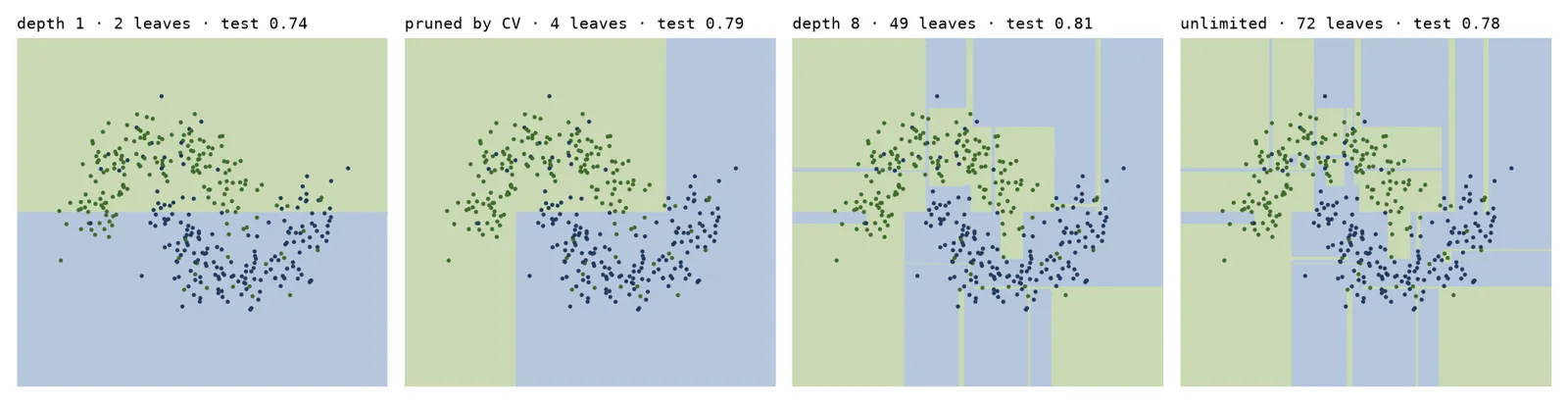
- 2Happy little treesWhen does a decision tree stop learning and start painting every accident?
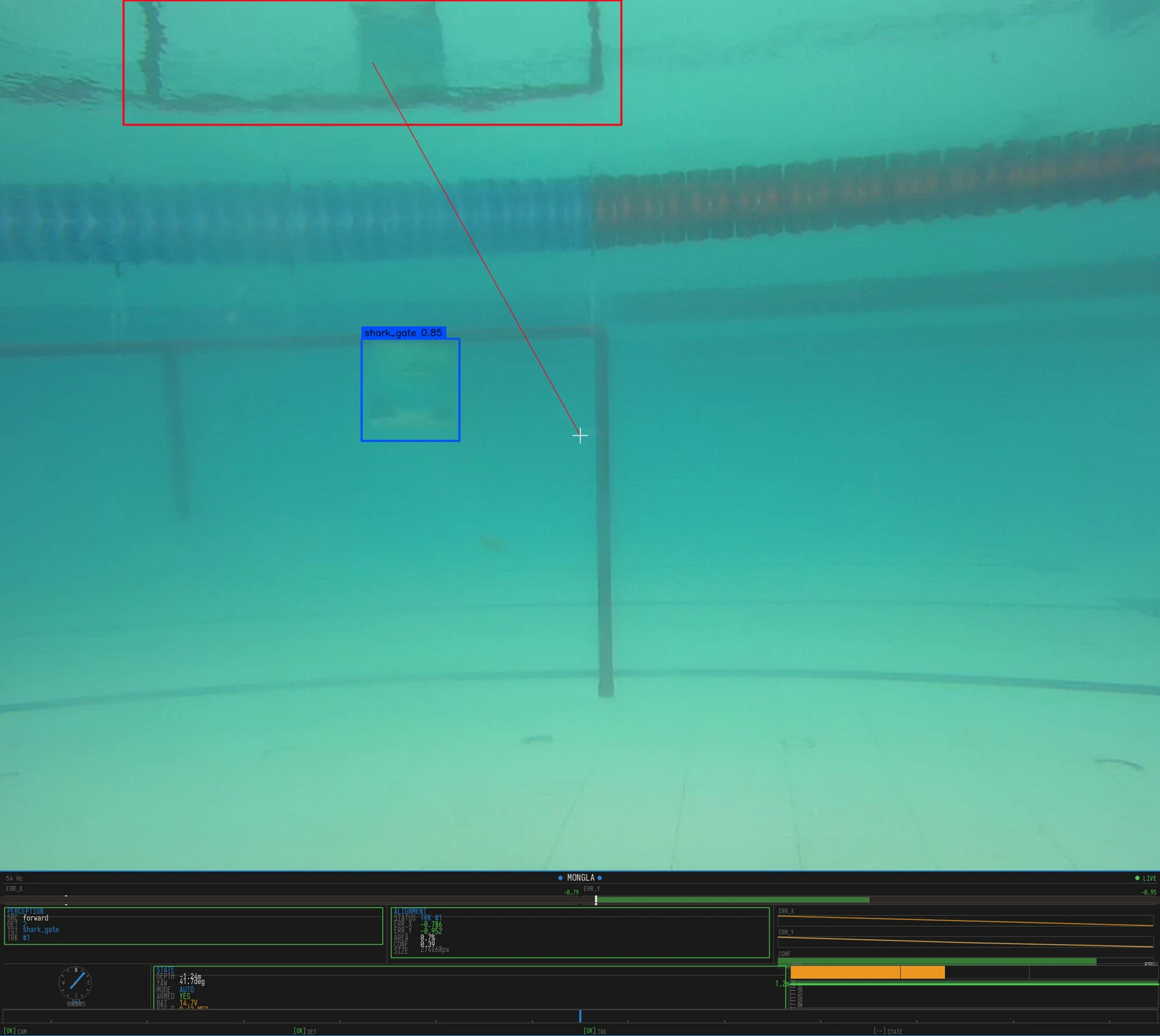
- 3The canary that was already deadA quantised feature model kept the same trust decisions on twenty recorded comparisons. The mistake was choosing a canary that had already failed the baseline.
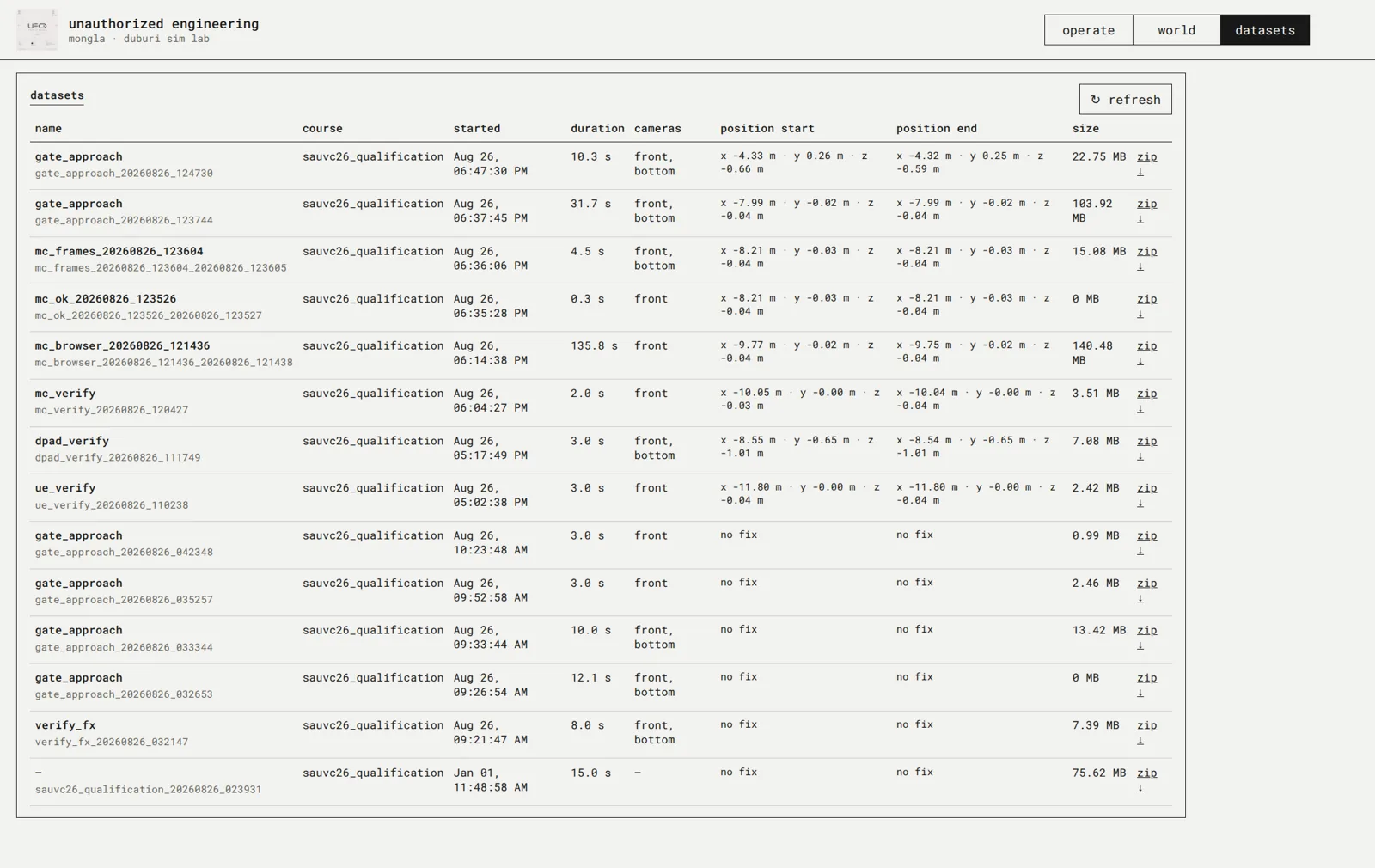
- 4Round 7 closes NO, twiceA fine-tune that won on every checkpoint was being scored by the wrong instrument. Retracting it once wasn't enough. The second retraction is the one that holds.
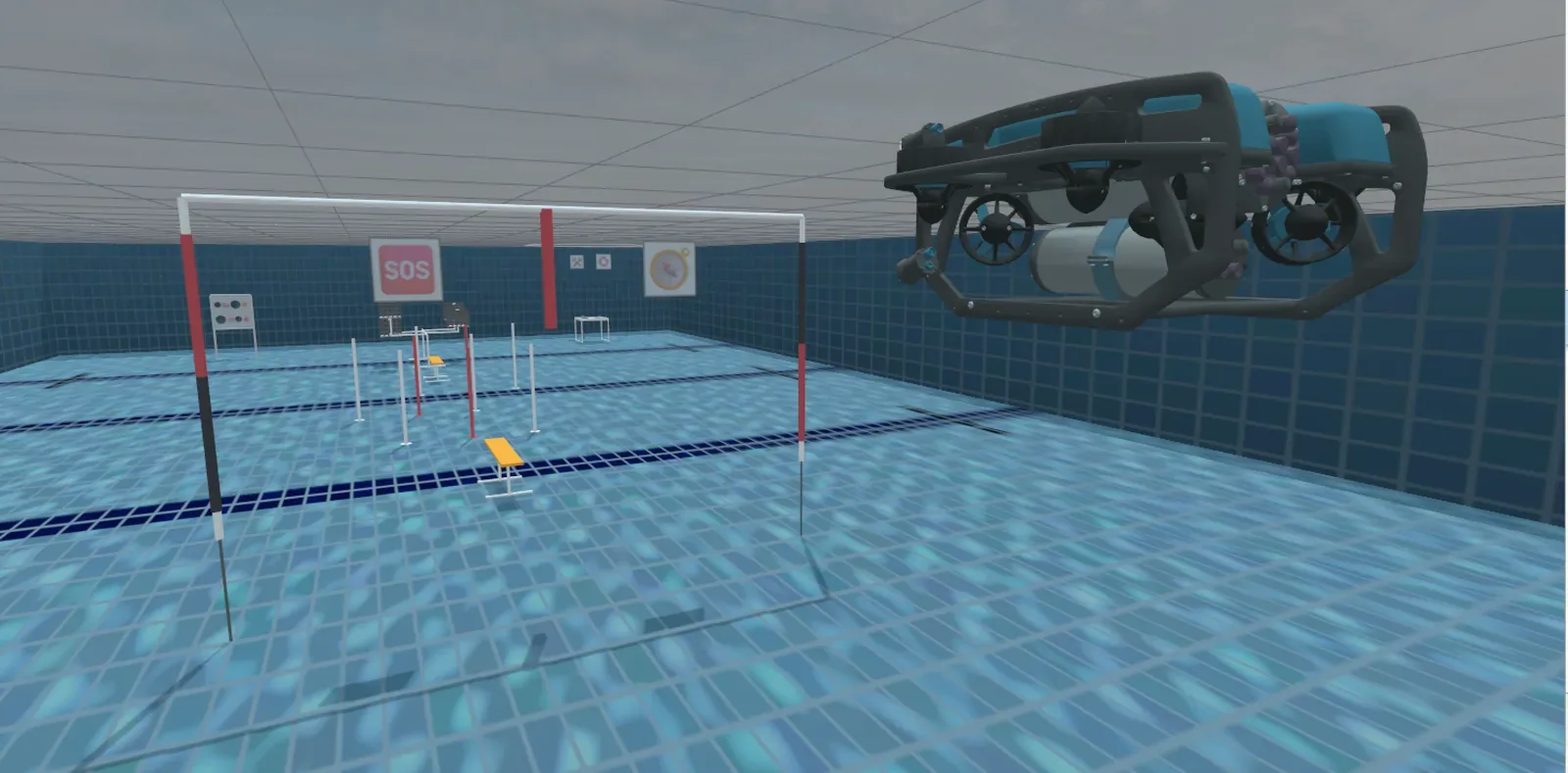
- 5Scoring an estimator against a truth that didn't exist yetProperty tests checked the filter's mathematics. A simulated plant made it possible to check a trajectory—and exposed why the starting condition mattered as much as the final number.
- 6One fix anywhere, or many fixes everywhereA localisation experiment reversed my earlier timing advice. Its more useful result was discovering when trusting a better measurement made a broken observation model worse.
- 7What thirty minutes of sitting still taught us about the IMUA quiet bench gives a useful reference condition, not exact knowledge of every state. Reading the recorded means, frame conventions and long-window statistics without turning them into a navigation guarantee.
নির্মাণ8 notes
Building things that run
Reachability, boundaries, process trees, and small tools: the difference between code that exists and code that runs.
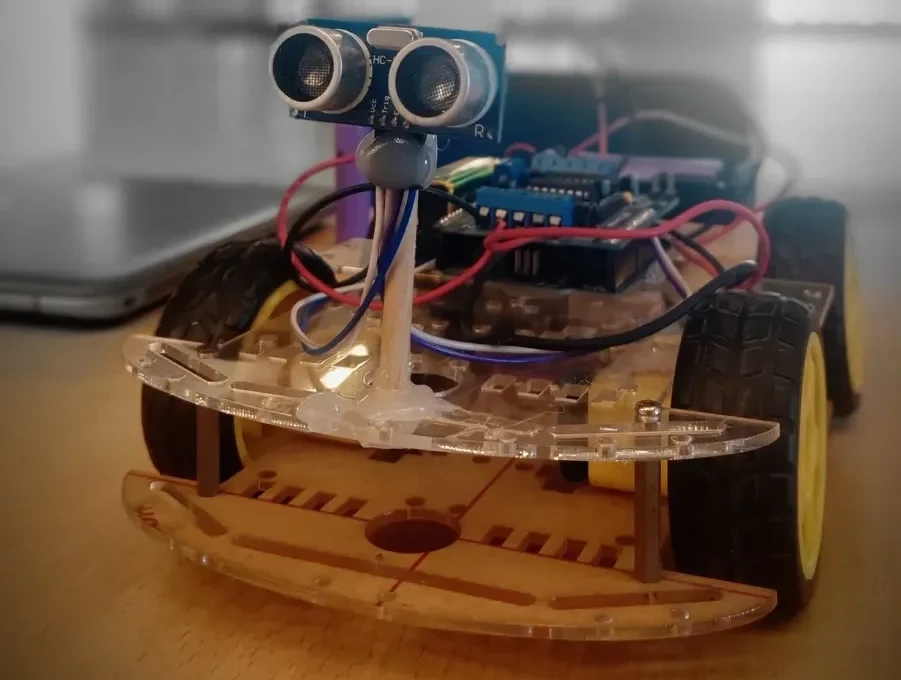
- 1E-BhapaSix hours, no team, one ultrasonic sensor, and a campus cat for a role model. Two years later I read the code properly.
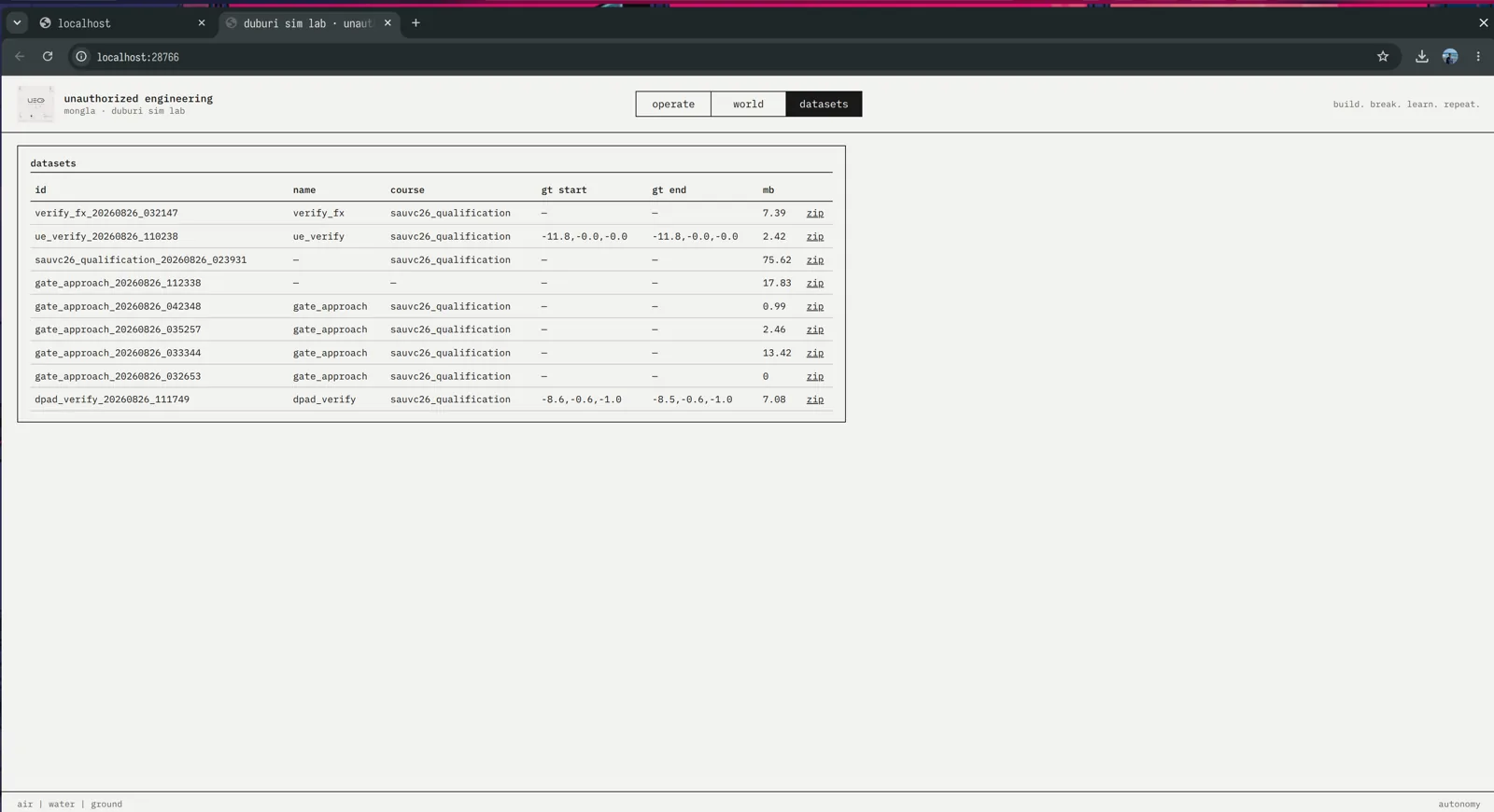
- 2A capability is only real if the path to it isThe most expensive defect I keep meeting: a feature that's written, reviewed and tested, and never runs, because nothing that runs calls it.
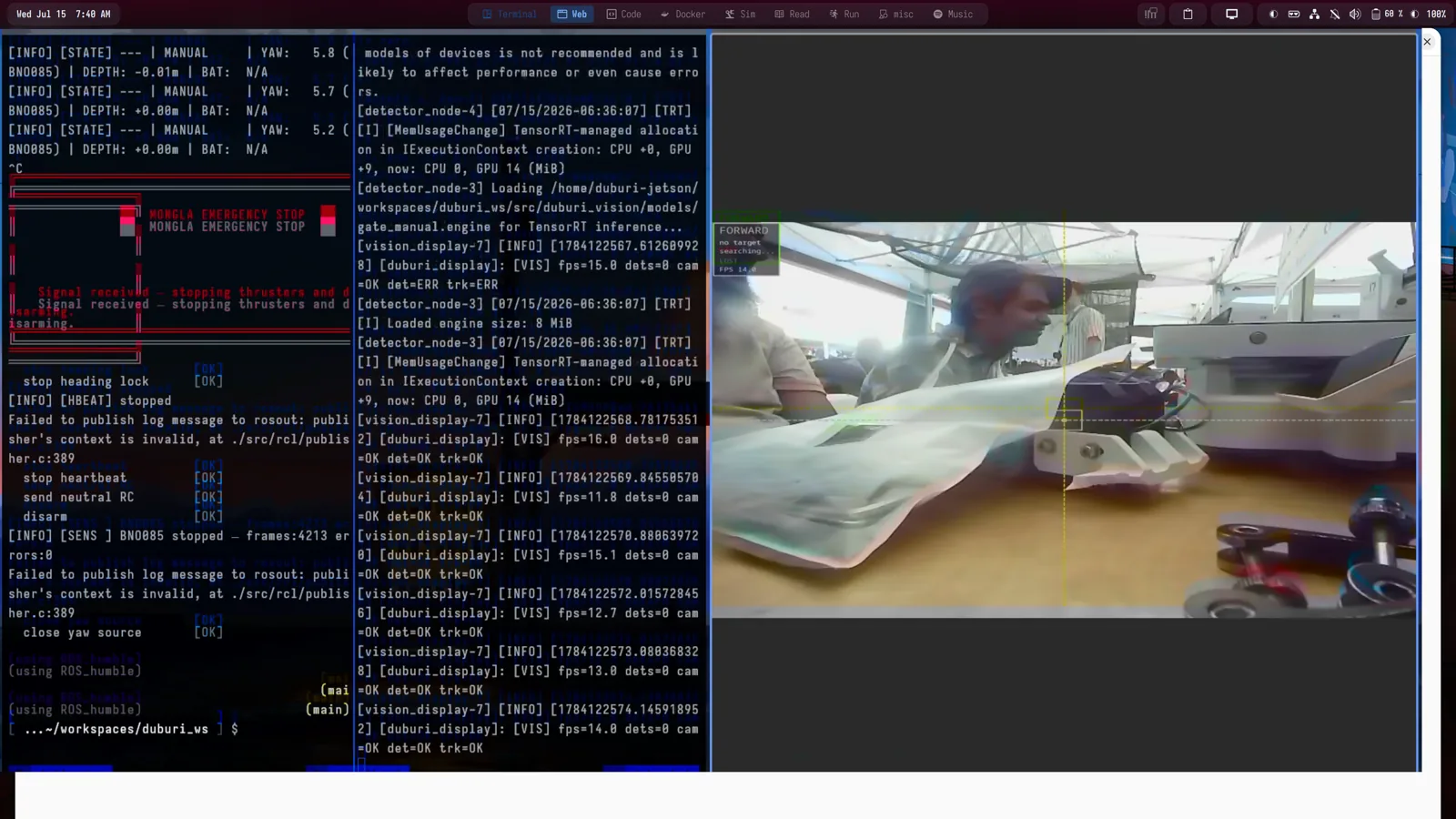
- 3From 'worked once' to 'works every time'The gap between a demo and a competition run is the gap between a capability existing and a capability being reachable, and between a test passing and a test that can fail.
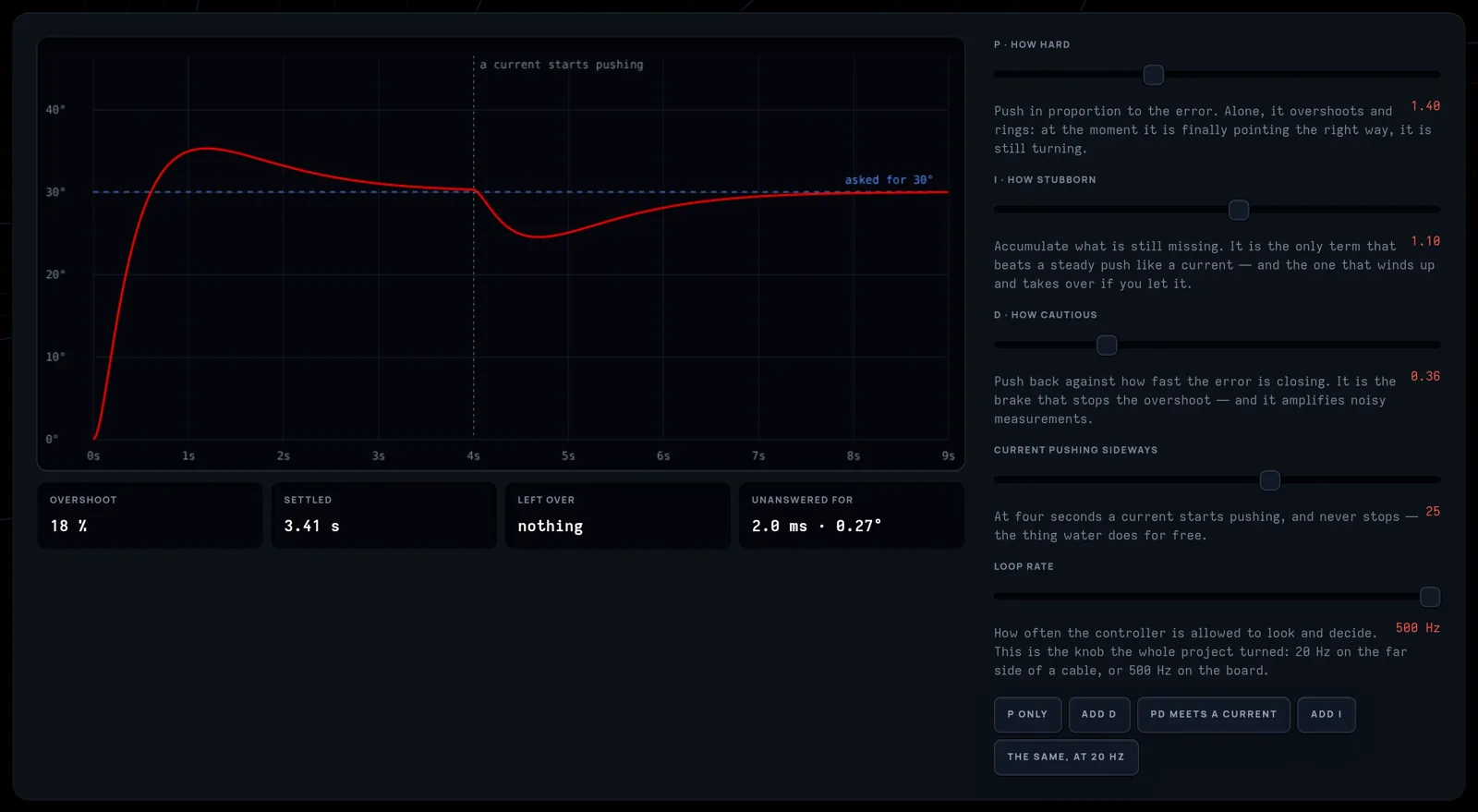
- 4The depth-sign flip that sent a simulated hull to +20 metresRunning the board's depth-control code against a dynamics model exposed a sign mismatch. The completed simulation is useful evidence; it is not the missing water validation.
- 5Killing a process tree the launcher wouldn't forward signals toTwo bench attempts missed the stop failure. A controlled process fixture exposed the reparenting case: children survived because the next tree walk could no longer find them.
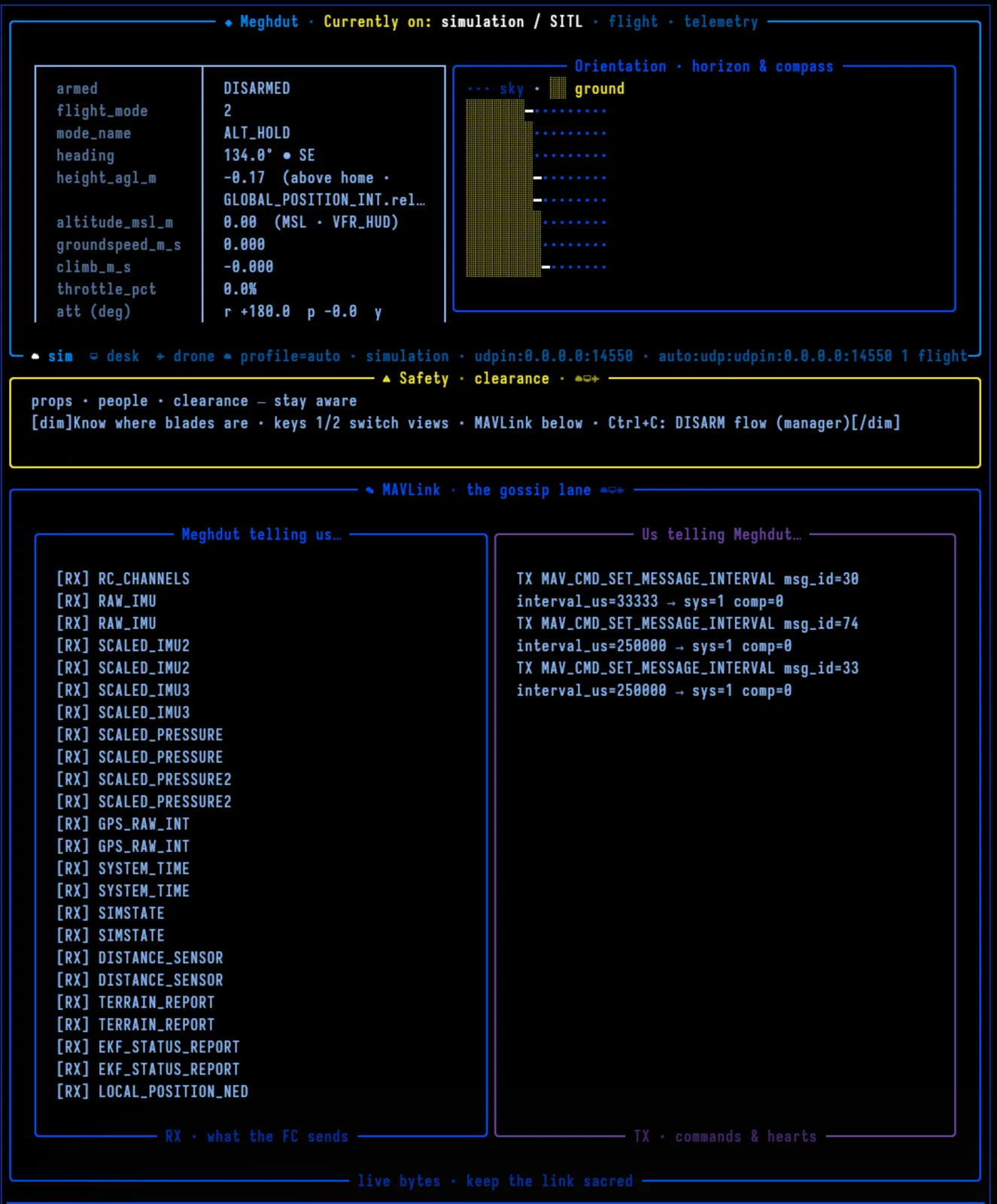
- 6The engine roomSeparate deadlines, decode only what a consumer needs, and check the instrument before trusting its verdict. Reading an earlier perception report against the later code and retractions.
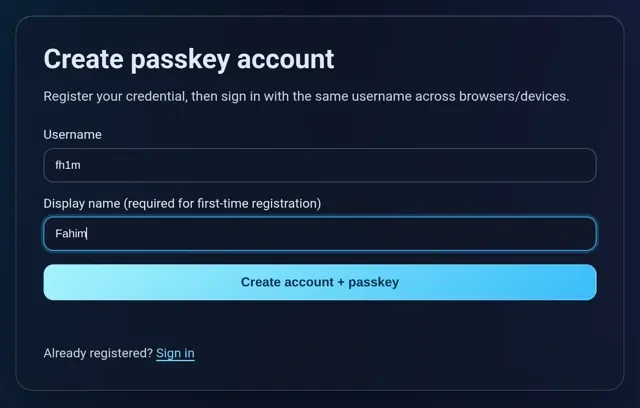
- 7PasslessA Flask/WebAuthn course project: what the browser signs, what the server checks, and why a working passkey ceremony is not a complete account-security design.
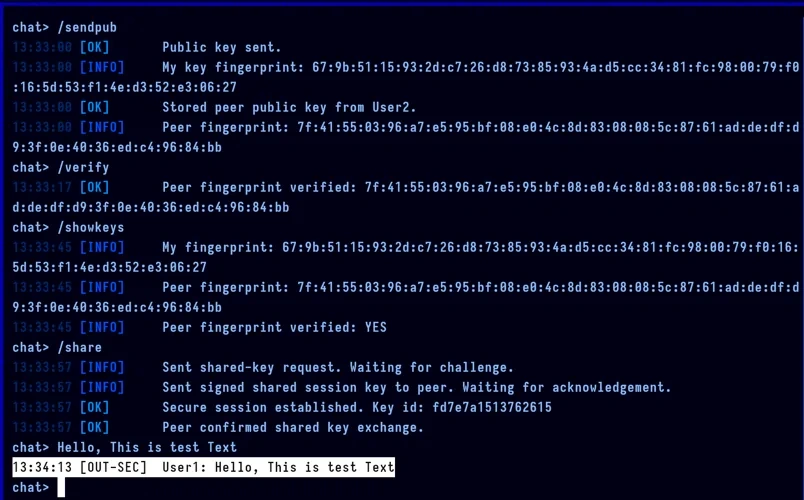
- 8What Wireshark seesA plaintext-to-encrypted terminal-chat experiment, read at wire level: bytes, authentication tags, fingerprints, and the policy gaps encryption does not fix.