02 — Work
Everything I’ve built
that had to work.
Underwater, in the air, on the ground, and in software. Competition vehicles, research code, firmware and tools — with real repositories and press behind them.
Featured work
 built · bench-validated
Mongla
2026 — presentAutonomous Underwater Vehicle
An AUV autonomy stack that has to be right when nobody is watching.
OPEN DOSSIER →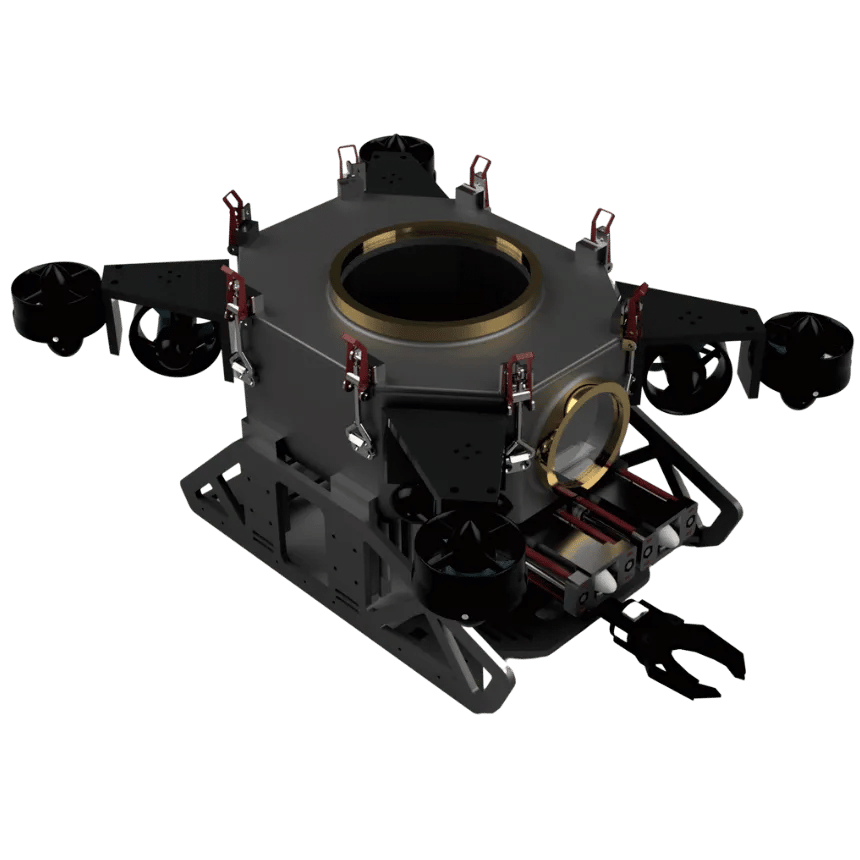 competed · in water
Duburi
2023 — 2026Competition AUV
The AUV that put Bangladesh on the RoboSub stage.
OPEN DOSSIER →Air · GNC
2023 — 2025Aerospace GNC
Guidance, navigation & control for rockets and GPS-denied flight.
OPEN DOSSIER →Mongol-Tori · Arm
2024 — 2025Rover Autonomy
A rover arm that types on its own.
OPEN DOSSIER →Passless
2026Security
Passwords are the vulnerability. Remove them.
OPEN DOSSIER →Cipher Project
2025Cryptography
Four classical ciphers — and the attack that breaks one.
OPEN DOSSIER →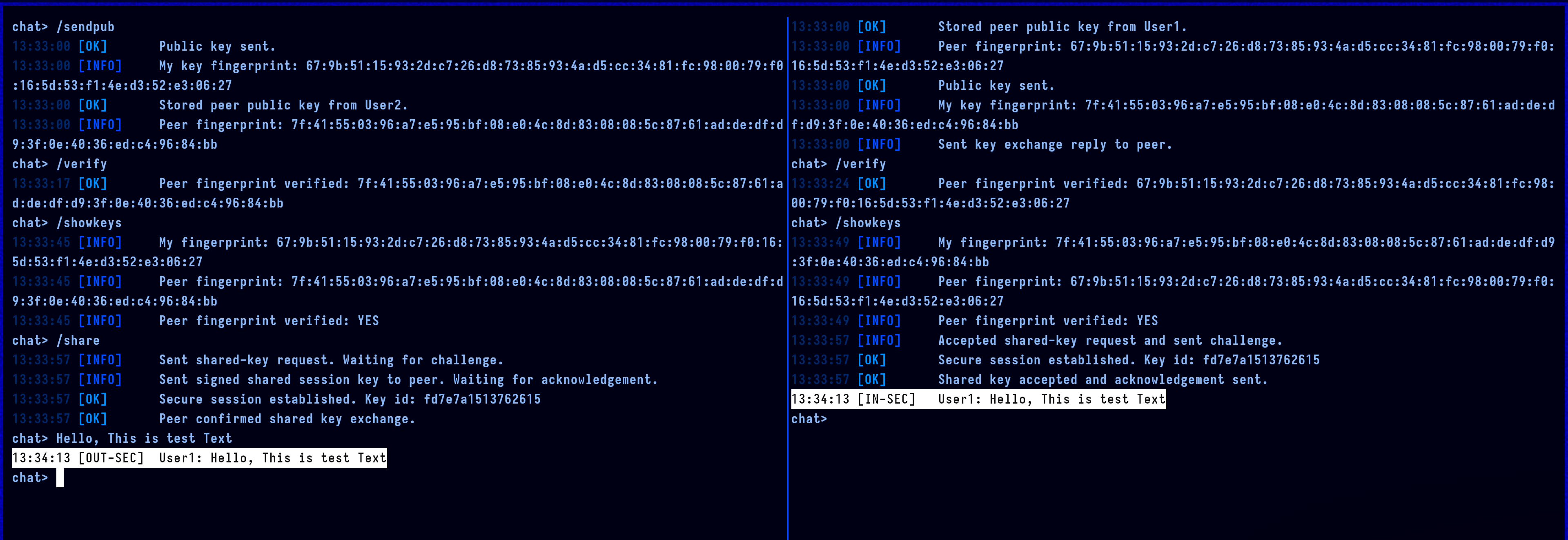 released
Secure P2P Chat
2026Security
End-to-end, in the terminal, no server in the middle.
OPEN DOSSIER →Arduino Vision
2024Embedded ML
A vision system on an Arduino Uno.
OPEN DOSSIER → firmware v1.0.0
Dristy
2026Vision Firmware
দৃষ্টি — a camera that answers with a number, not a video stream.
OPEN DOSSIER →Track & Predict
2024Computer Vision
Don’t just track it — predict where it’s going.
OPEN DOSSIER →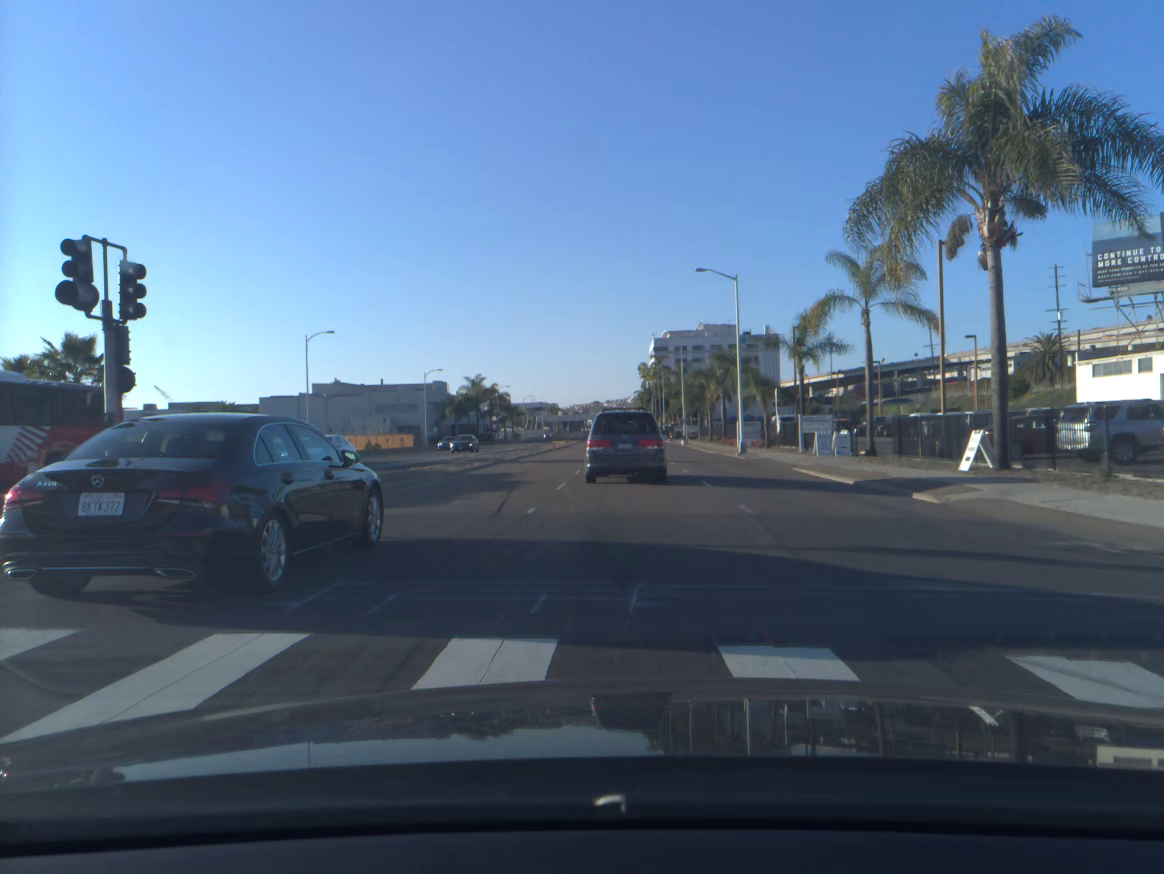 attempted (fork)
comma.ai Calib Challenge
2023Computer Vision
Estimating camera pitch & yaw from dashcam video.
OPEN DOSSIER →On GitHub
Independent ROS 2 autonomy stack for AUVs — custom board firmware (500 Hz), Hailo-8 vision, right-invariant EKF. No number ships without its measurement.
AUV research & experimental concepts tested on Duburi 4.2 — the R&D bench behind the competition stack.
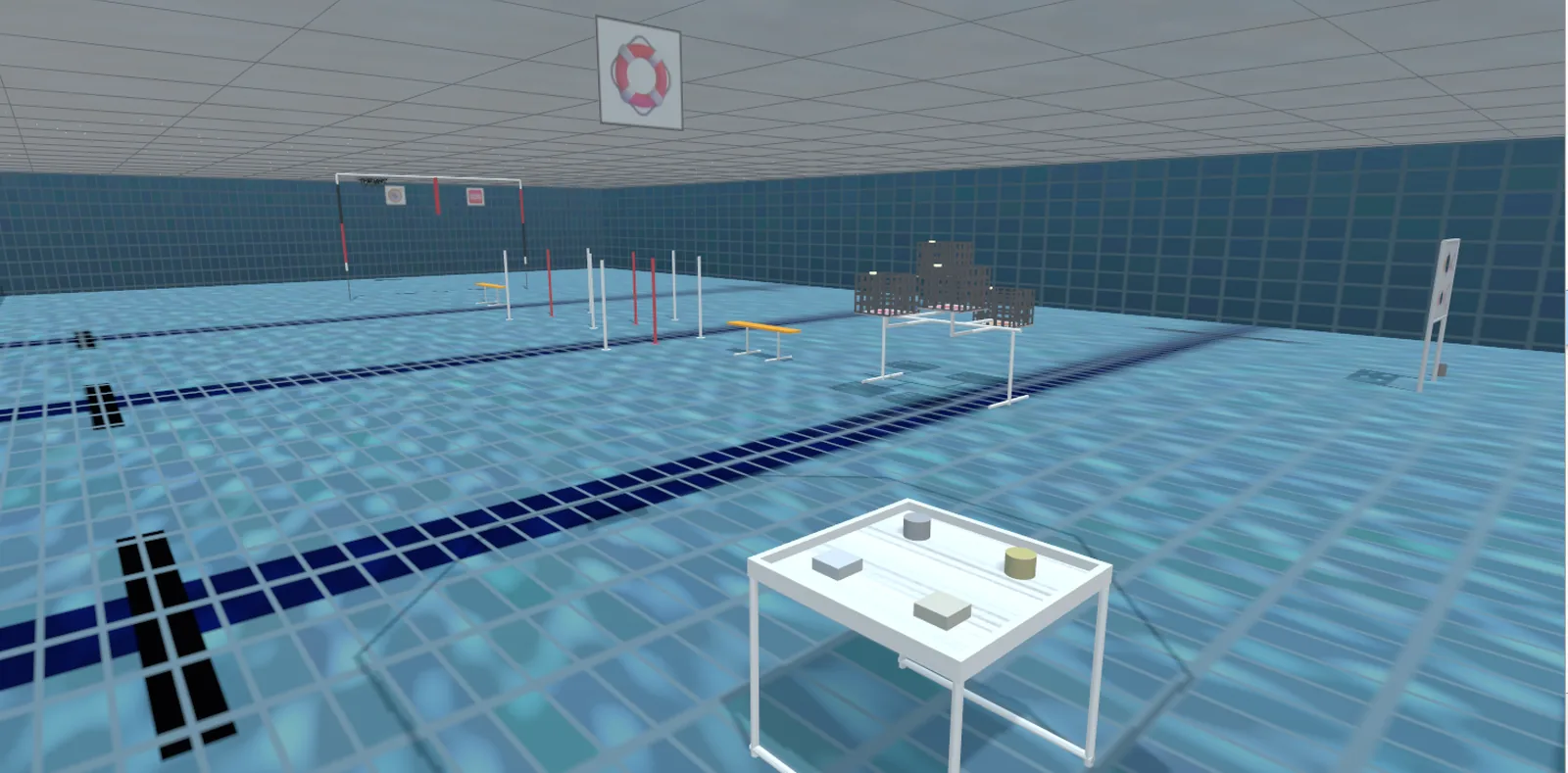
Gazebo simulation workspace for the Duburi AUV — courses, props, both cameras, ground truth.
Systems-level C — low-level tooling. (Dristy = “vision/sight”.)
Python/Flask proof-of-concept for passwordless WebAuthn authentication.
Encryption tool implementing 4 classical ciphers (Caesar, Affine, Playfair, Hill) with a PyQt6 GUI, a CLI, and Hill-cipher key recovery via known-plaintext attack.
Secure terminal-based P2P chat in Python — RSA key exchange, AES-GCM messaging.
A system that not only tracks objects but predicts their direction and speed.
Night-vision, in software only — detecting colour signs in the dark with computer vision.
A vision system built on something as simple as an Arduino Uno — ML + microcontroller.
A bare-bones bot showing what clever firmware can do with minimum sensory overload. Named after BracU’s beloved “Bhapa”.
My run at comma.ai’s calibration challenge — estimating camera pitch/yaw from dashcam video. (Fork of commaai/calib_challenge.)
A custom browser start page, inspired by Tilde Enhanced. An early go at web.
The AUV — the platform behind the RoboSub campaigns.
AI & machine-vision work for the Duburi subteam.
Generative vision experiment — reconstructing faces.
A decision-tree classifier from the ground up.
Linear regression from first principles.
How Duburi learned to see
Bangladesh’s first autonomous underwater vehicle team, founded at BRAC University in 2017. I joined the vision subteam in 2023 and left it running the engineering. This is the machine that put the country on the RoboSub stage — four vehicle generations, one stubborn idea: an AUV that understands the pool before it moves.
A vehicle that has to be right on its own
Underwater there is no radio, no GPS, and no second chance to explain yourself. Everything Duburi does — find the gate, align, fire, surface — it decides from the inside, from a camera and an IMU and pressure. The whole design is downstream of that one fact.
Rebuilt, not patched
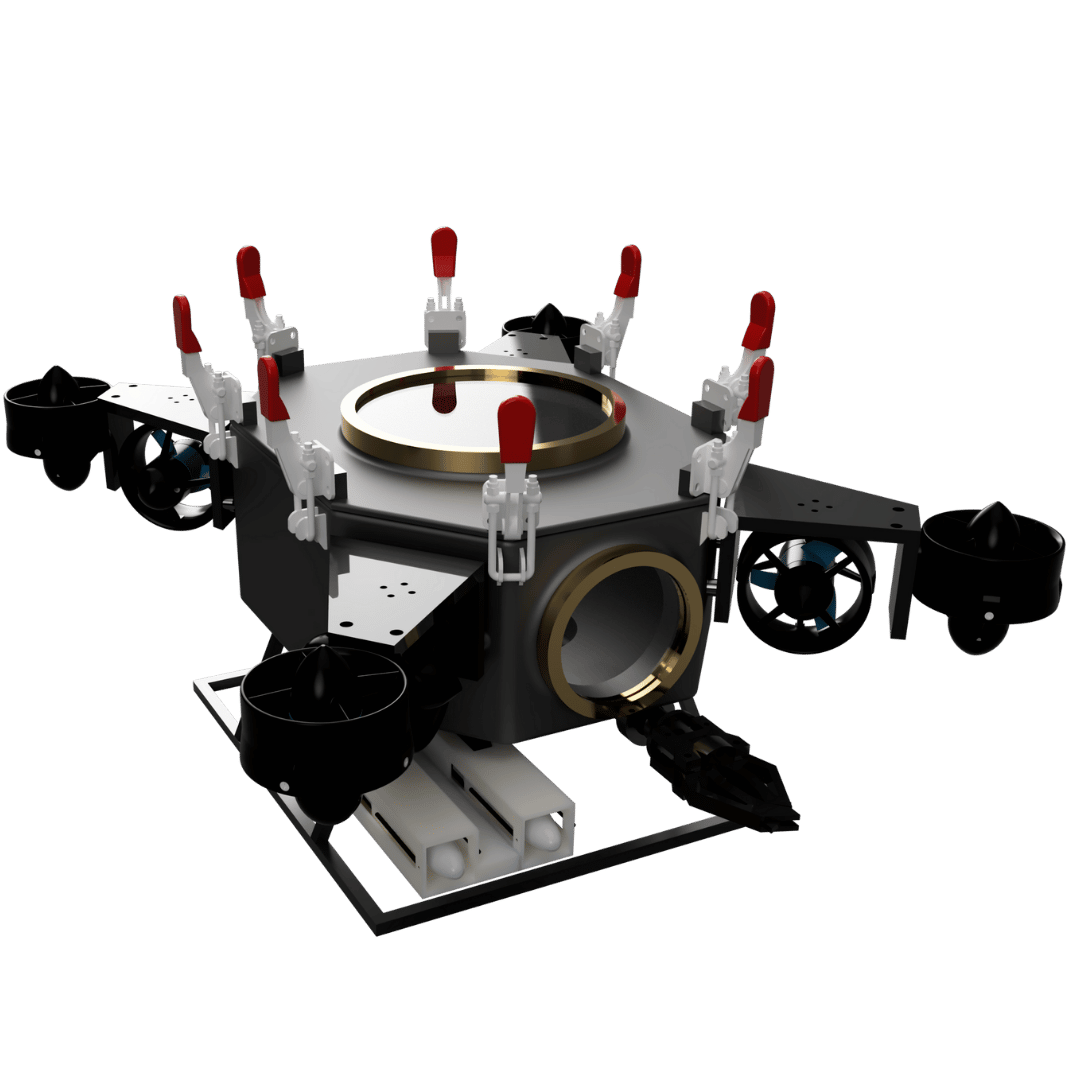
The vehicle line runs from 1.0 to 4.5, plus a mini-AUV, Dubomini. Every generation re-opened the architecture instead of bolting onto the last — the same instinct Jim Keller has about chips. The mechanical, electrical and software subteams move together because the machine is one system.
“A vehicle that cannot measure its own motion must not claim it did not move.”
The vision stack, rebuilt on CNNs
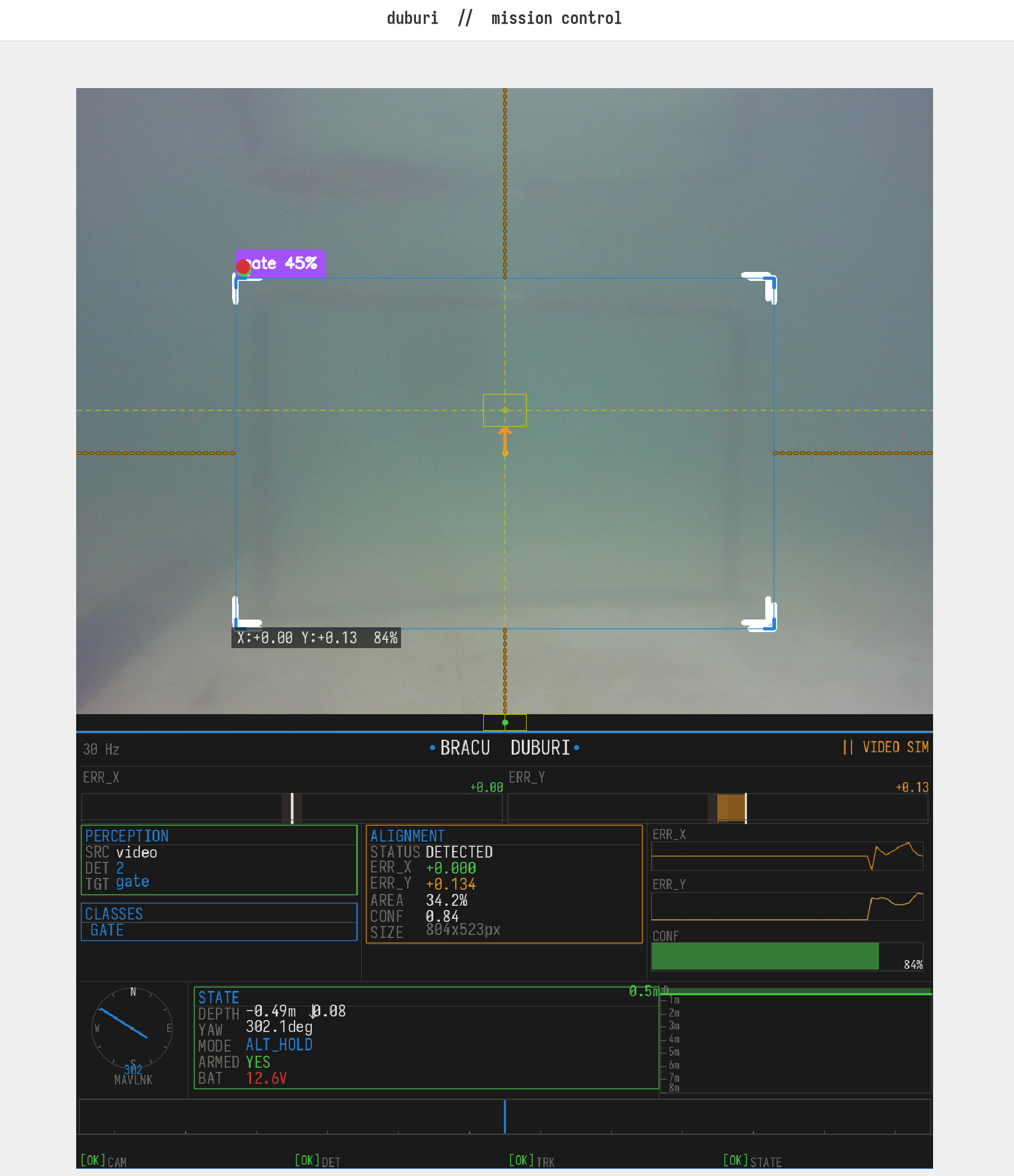
I rebuilt perception on modern CNN architecture with a custom dataset pipeline — Domain-Specific Pretraining and Source-Free Domain Adaptation so the model survives water it was never trained on — and deployed it to edge inference on the vehicle. Then I wrapped it in tooling so the team could train, deploy and debug without me in the loop.
The record
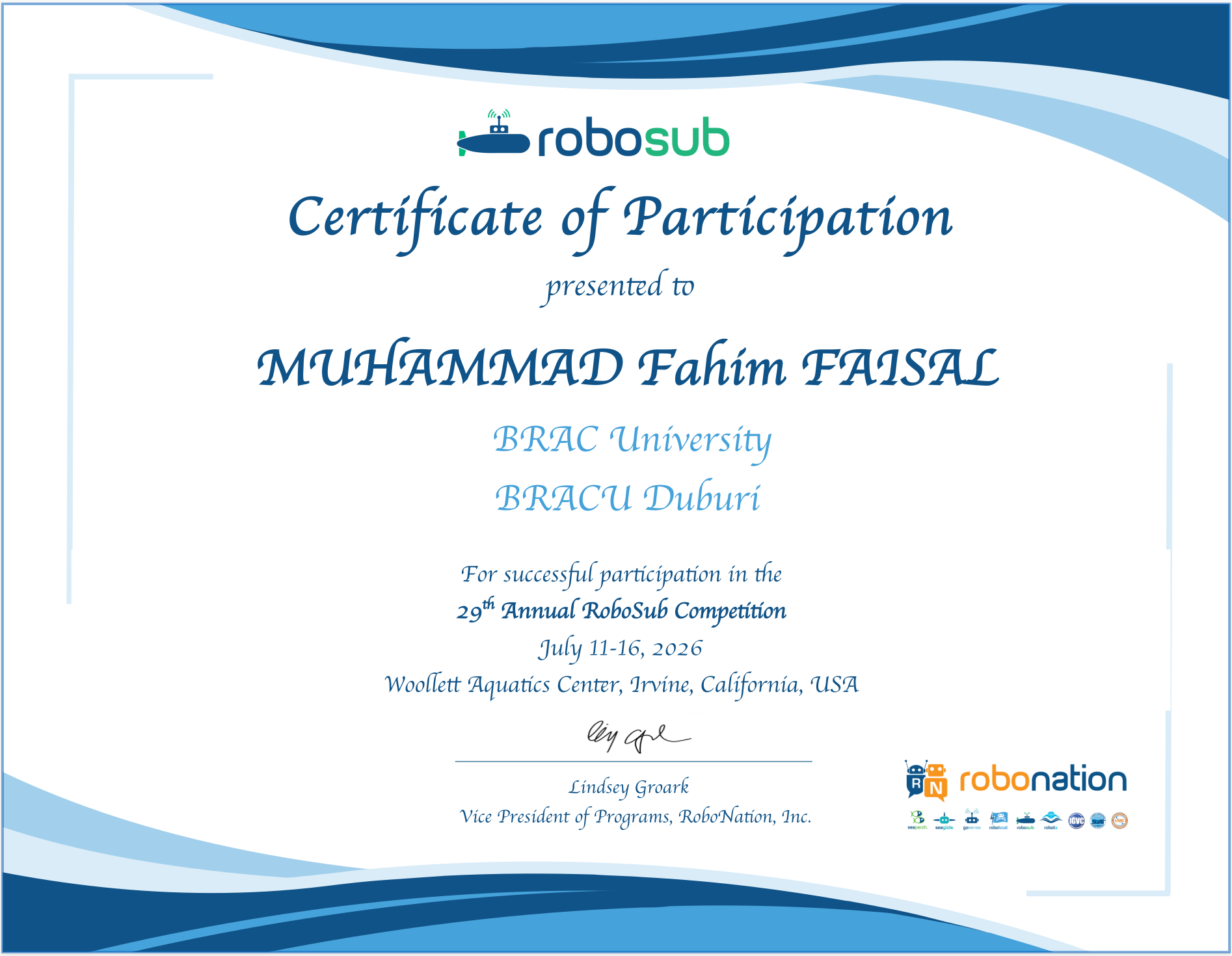
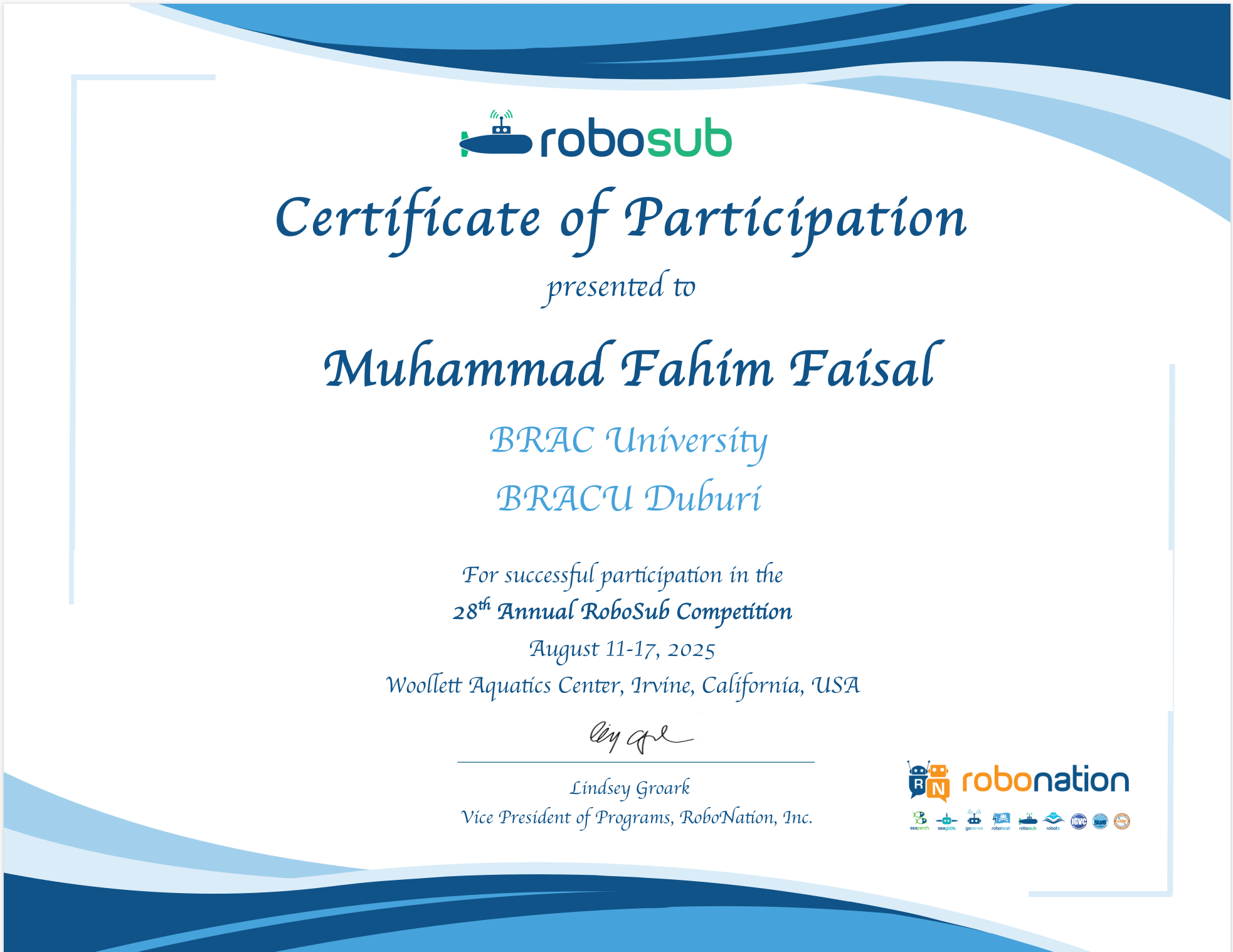
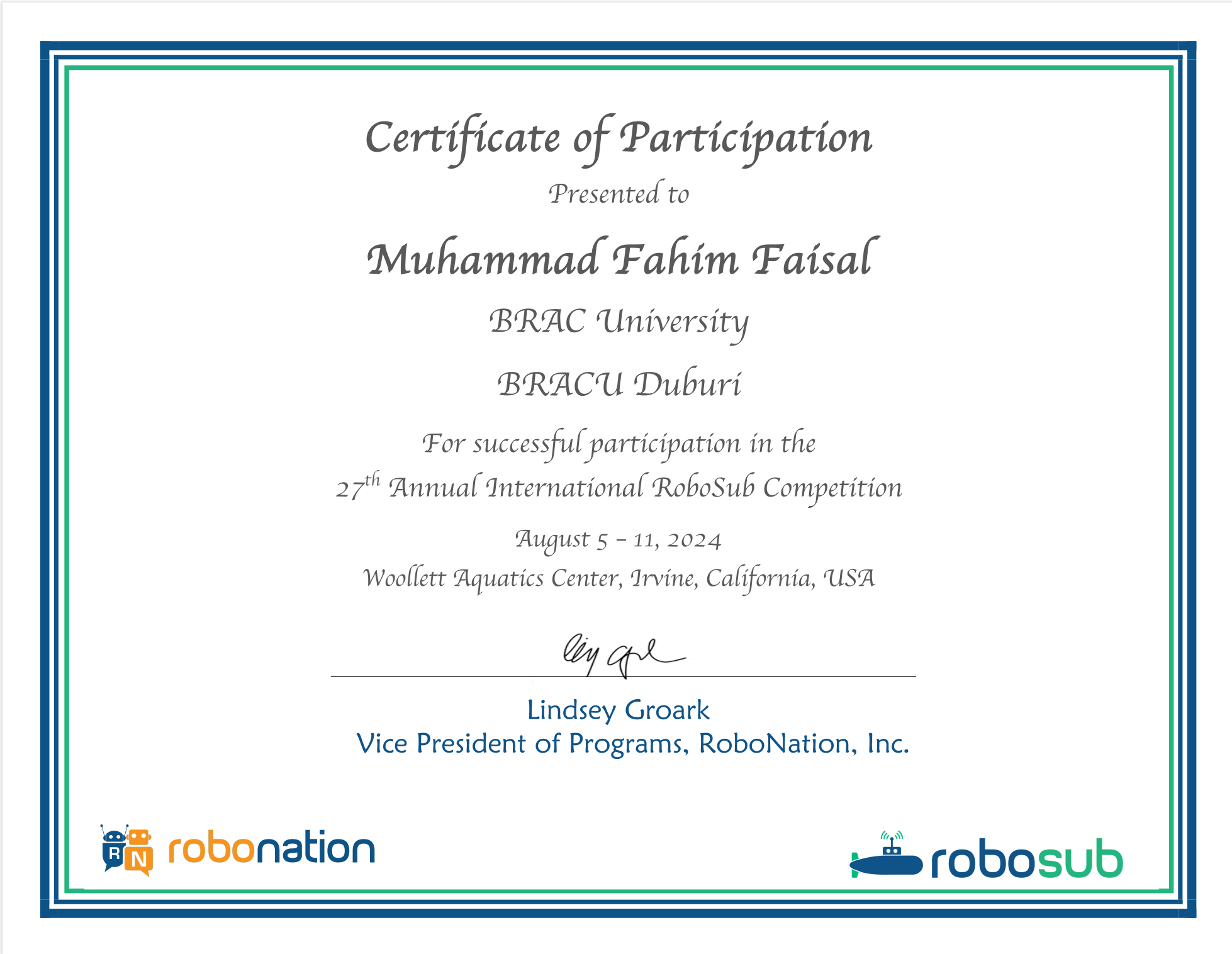
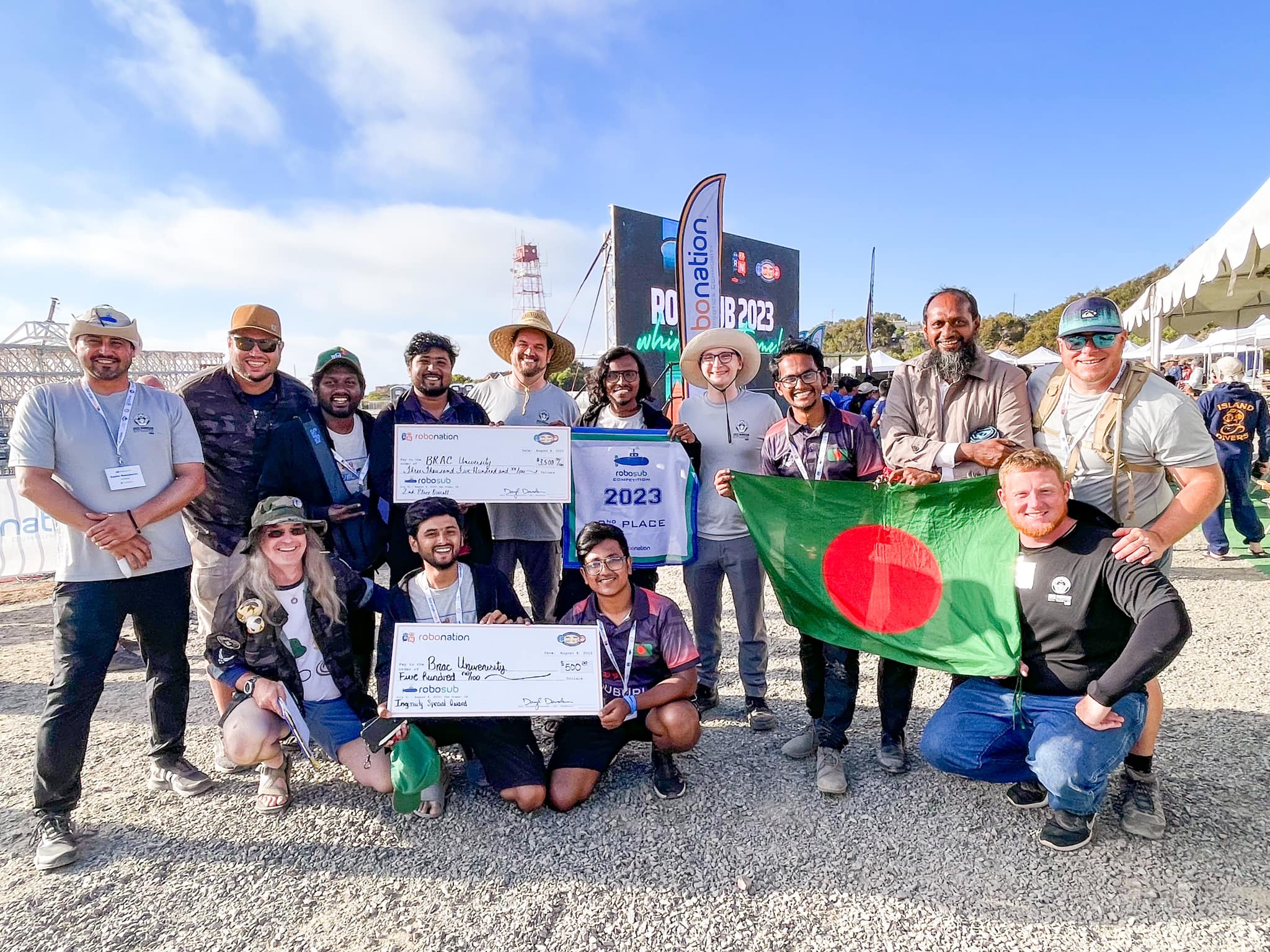
RoboSub 2023: 2nd overall plus the Ingenuity award. 2025: semi-finals and a special Entrepreneurship award, 8th of 58. 2026: two vehicles qualified for the semi-finals. Between them, three participation certificates from San Diego — and a country on the board.
From rockets to water
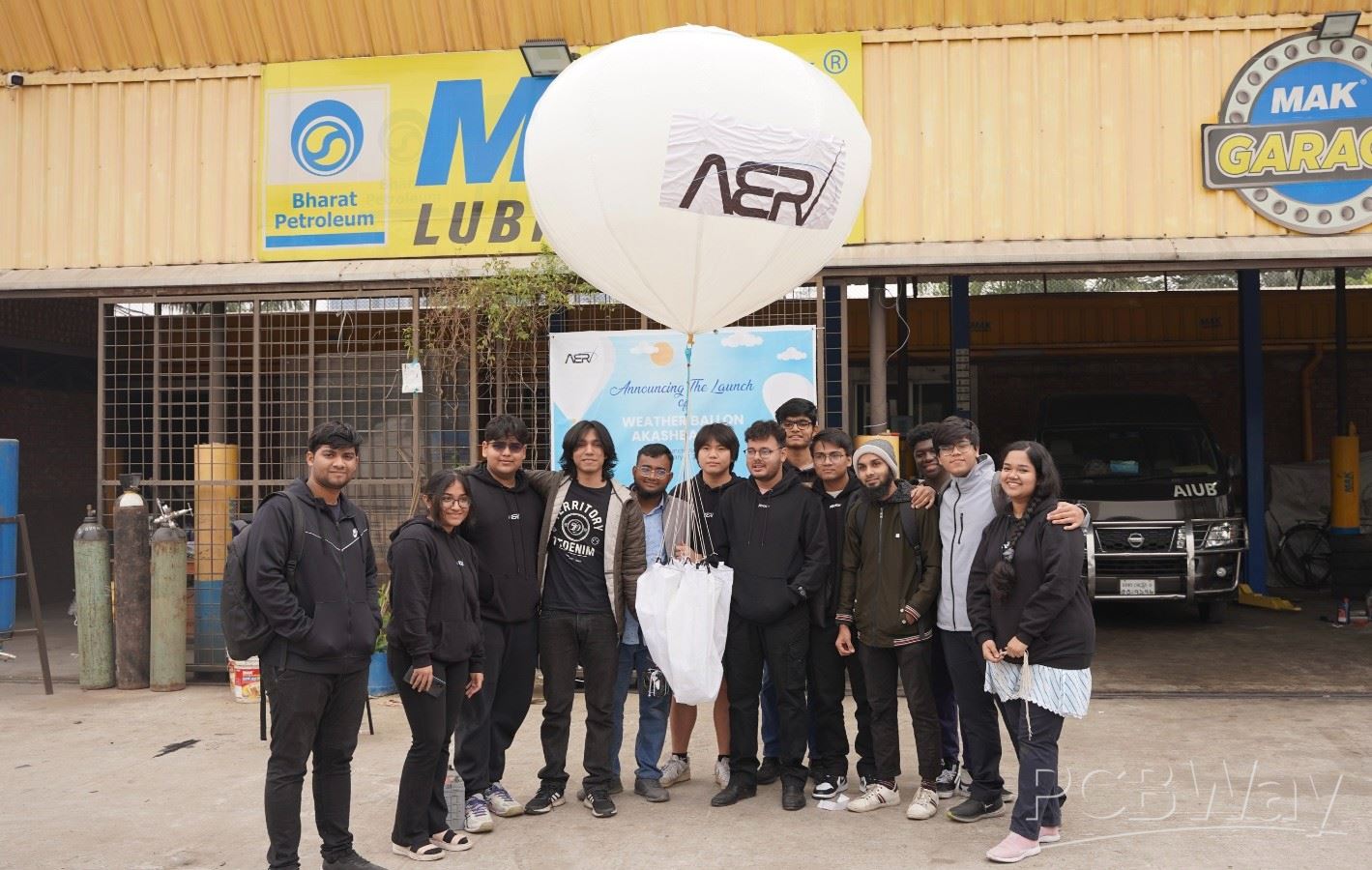
Before the AUV there was a rocket. At Amateur Experimental Rocketry Dhaka I worked A&GNC, trajectory prediction and parachute — part of the team behind Bangladesh’s first successfully tested hybrid rocket engine. The question was always the same one water would later ask: how does a machine control itself when it cannot ask for help?
The hardest place to hide
I started where machines are hardest to hide: something that has to leave the ground. Guidance, navigation and control for experimental rocketry — a ROS 2 stack for data acquisition, and a VSLAM stack for GPS-denied flight where, like underwater, there is nothing overhead to trust.
A national first, on a bench
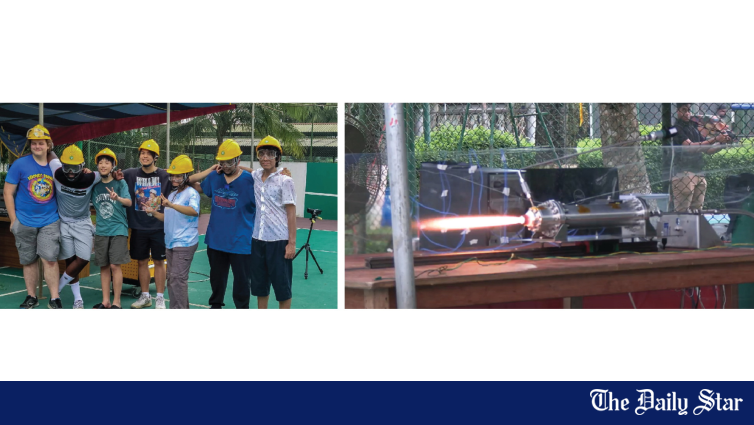
The engine fired successfully at AIUB’s research facility — the first hybrid rocket engine ever tested in the country, covered by The Daily Star, Dhaka Tribune and others. I also led V1 of an in-house flight computer for a monocopter UAV, and ran RocketPy trajectory prediction against real flight-test data.
“Physics gets the final vote.”
Controls that had to hold
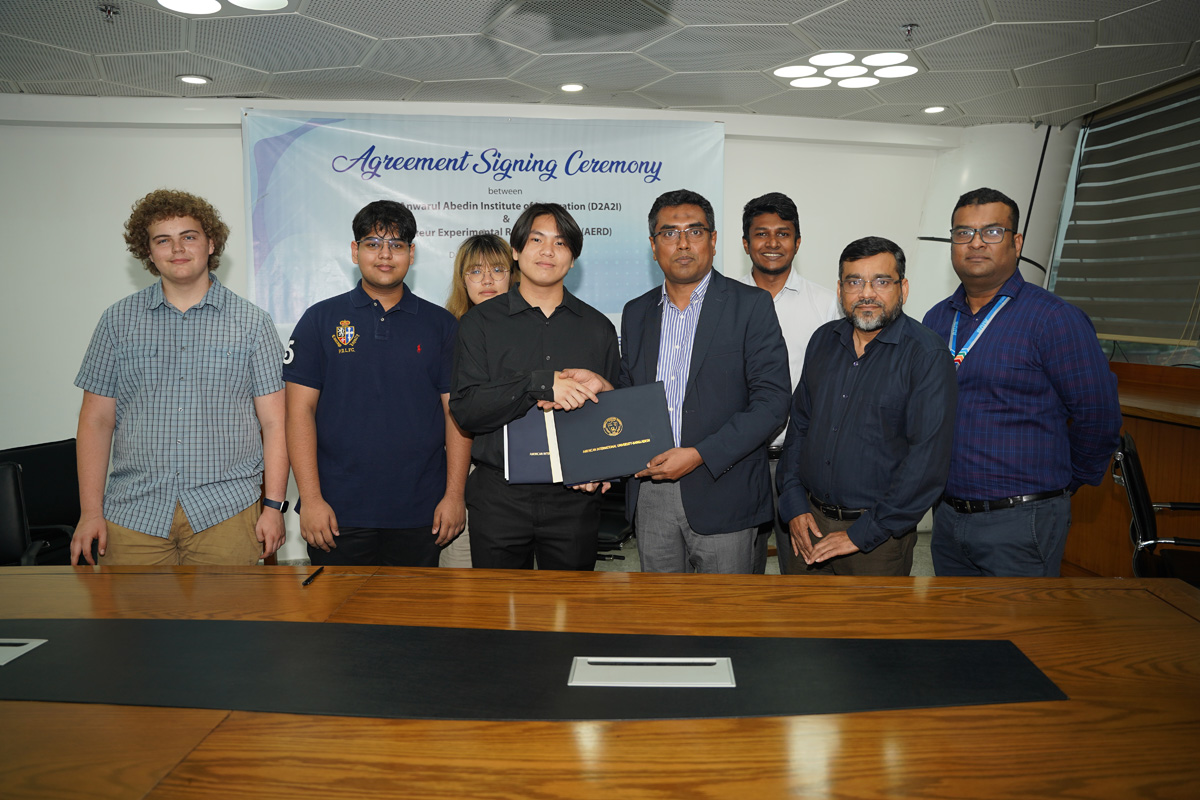
At BRACU’s LASSET lab I built an in-house PID controller for a TVC gimbal and a 2-axis controller, and submitted the demo to the Research Excellence Awards Initiative for funding. The gimbal is where I learned that a controller is not clever — it is patient, many times a second.
signed, dated, and in the water