2026 →
Rupsha
A rover that has only ever driven inside a computer. It says so on the label.
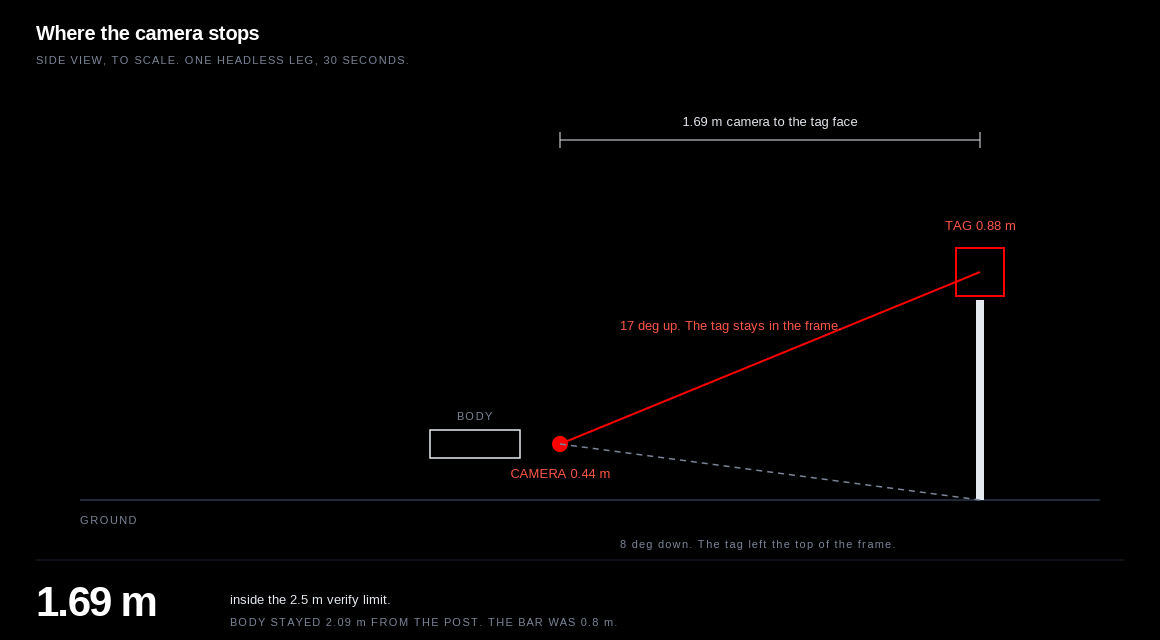
A small Ackermann rover must turn visual observations into a reachable drive request while keeping the computer's failures from becoming indefinite motion. Marker detection range, steering geometry and stale commands are different parts of that problem.
My part author
My contribution
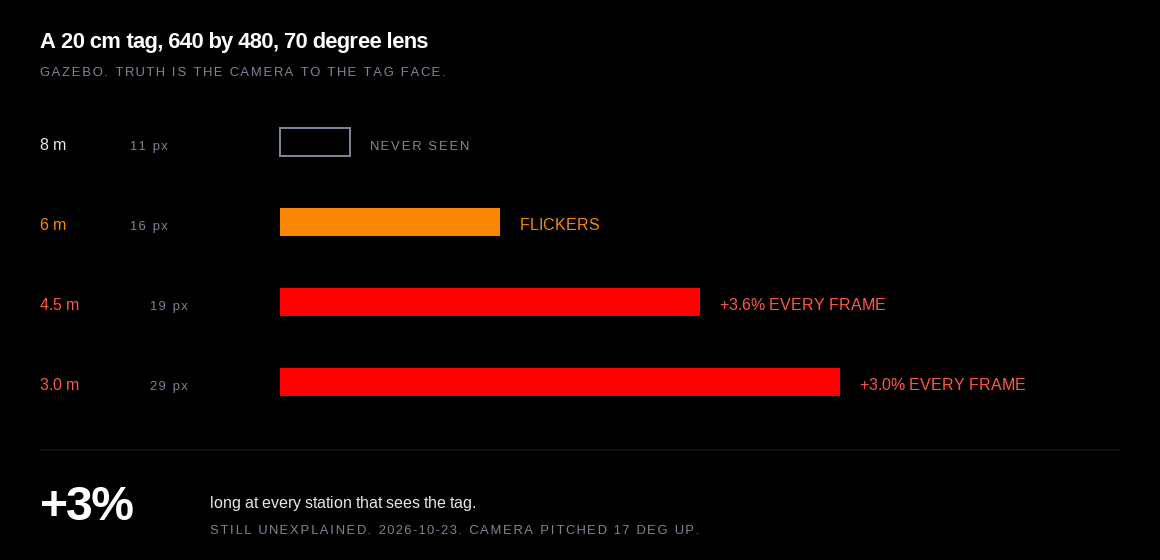
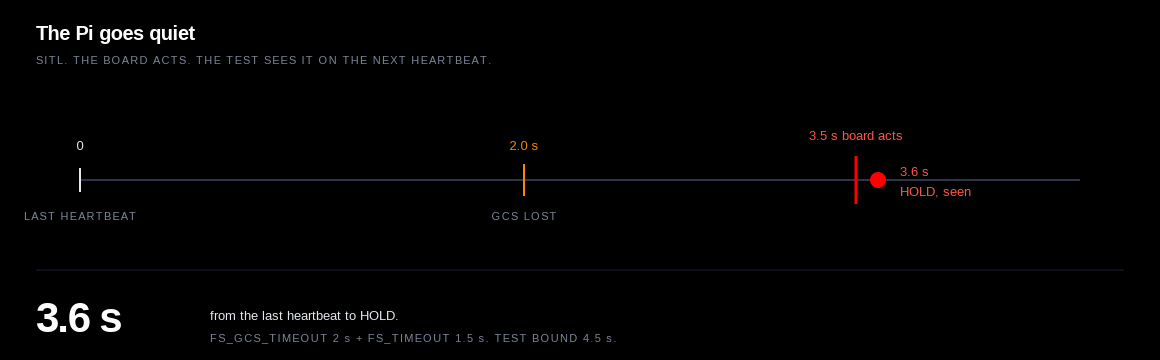
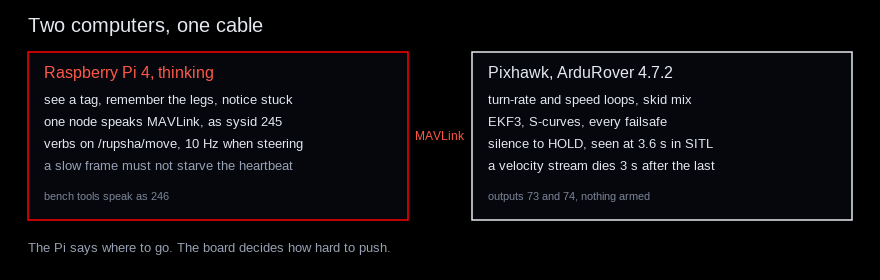
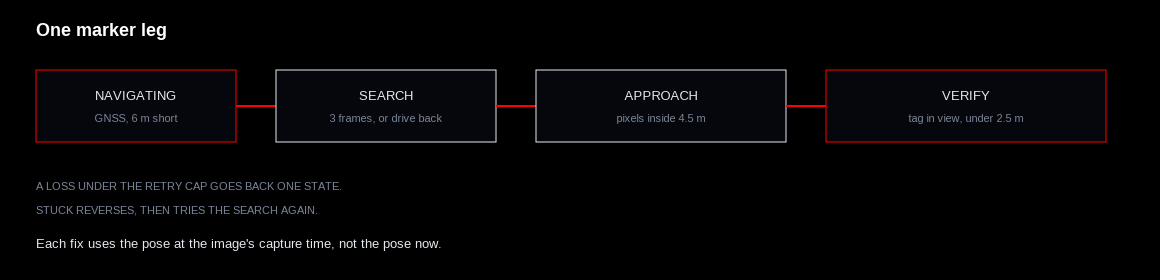
A Raspberry Pi handles the higher-level stack while an ESP32 board owns the vehicle loop. In Gazebo, the inspected tag experiment finds a 20 cm marker reliably at 4.5 m, intermittently at 6 m and not at 8 m. The source-backed diagrams separate the command path, hold behavior and marker-leg states.
Inspect the work
A rover stack named for the river upstream of Mongla: same fundamentals, a different vehicle. Nothing is FIELD yet.
- ~3 %tag range long, Gazebo
- 4.5 mseen every frame
- 8 mnever seen
- 0FIELD claims
Nothing is FIELD until it has been outdoors
Sim-on-hardware would let the real flight board stand in for the field.
It fits and boots on the Pixhawk, but its simulated IMUs never report healthy, so it's BLOCKED. And the board refuses to arm until a person physically rotates it for compass calibration.
Archived source: fh1m/rupsha_ws. Read the finding
Every commit
Each dot is one commit, placed by date. The red ones are fixes and retractions. Point at one to read it.