2024 → 2026
E-Bhapa
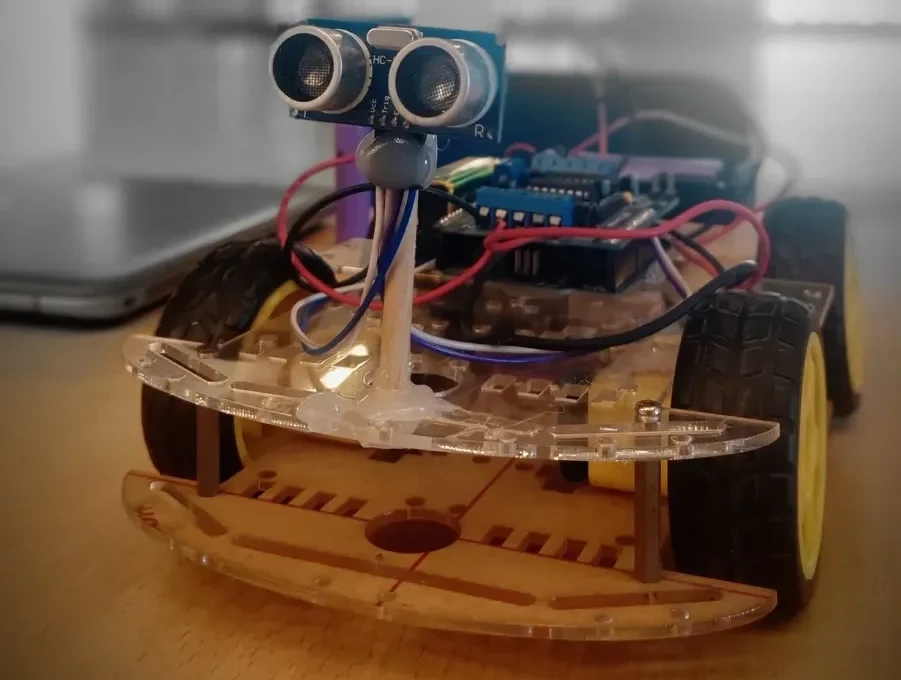
Built in one night. The drive adapter had other plans.
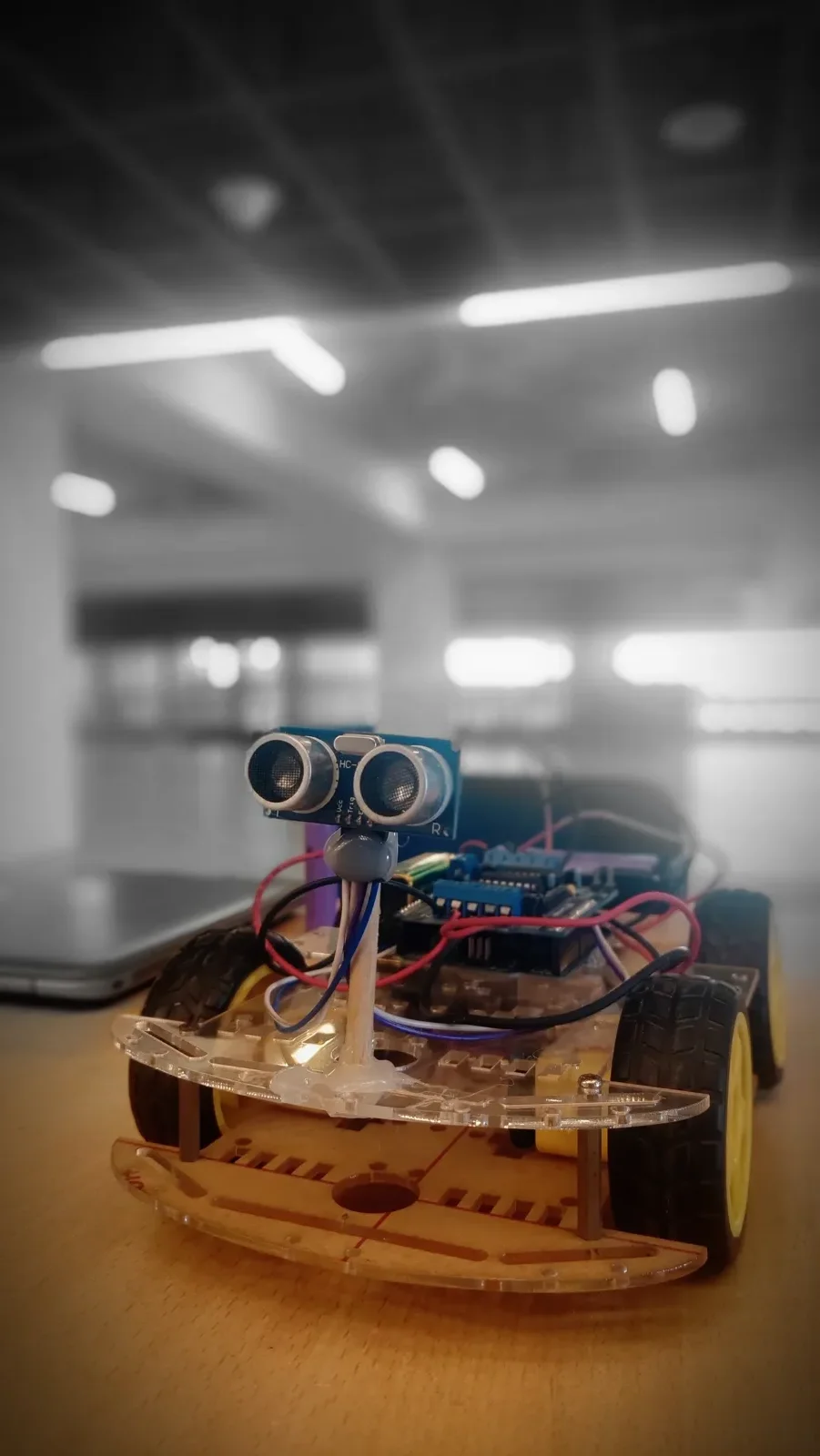
The contest robot had one ultrasonic sensor and very little time. Its sketch mixed signed motor requests with an unsigned representation, while the chosen drive behavior did not create the turning difference the chassis needed.
My part author
My contribution
The later audit separates the wiring and numeric faults from the behavioral rule. Re-enacting the original sketch beside corrected variants makes it possible to see why fixing a representation bug and designing useful obstacle avoidance are not the same task.
Inspect the work
One night, one sensor and a campus cat for a role model. The later audit finds a drive adapter that cannot command independent wheel speeds.
- 1night to build
- −255 → 1uint8 speed
- 87 %of the run pinned to a wall
Loading the diagram. It needs JavaScript; the text around it says the same thing in words.
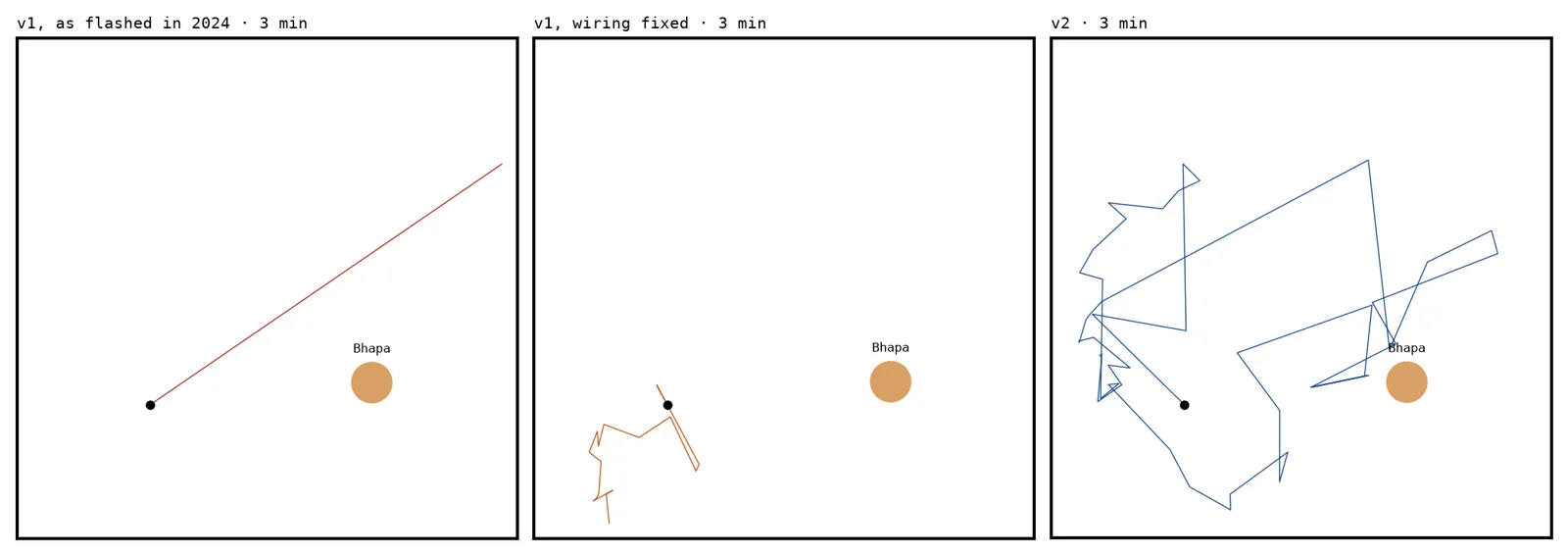
A negative speed is a polite crawl
The robot turns, backs away from walls and follows at a safe distance, as its README said.
It never turned and never reversed: both sides averaged to the same speed, and the motor library's speed is a uint8, so −255 became 1. Pinned against a wall 87 % of the time in simulation.
Archived source: fh1m/E-Bhapa. Read the finding